
Transformer Knowledge Base & Buying Guides
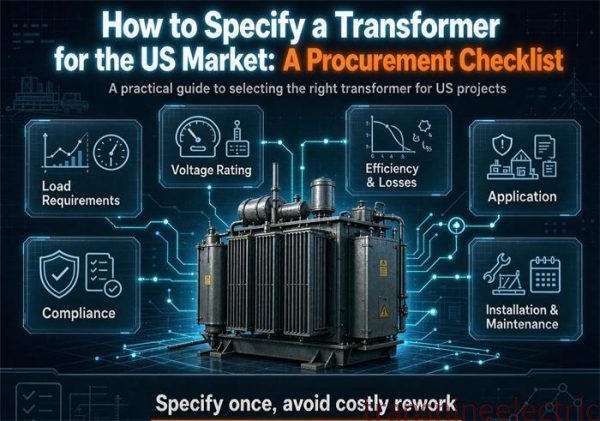
How to Specify a Transformer for the US Market: A Procurement Checklist
To specify a transformer for the US market, lock four things first: the ANSI/IEEE product standard and its…
Read more →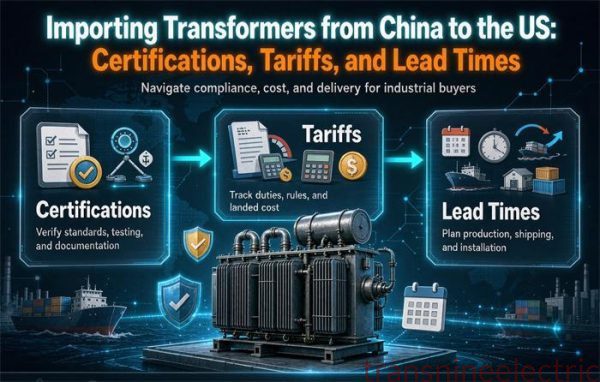
Importing Transformers from China to the US: Certifications, Tariffs, and Lead Times
Importing a transformer from China to the US in 2026 comes down to three moving parts: the right…
Read more →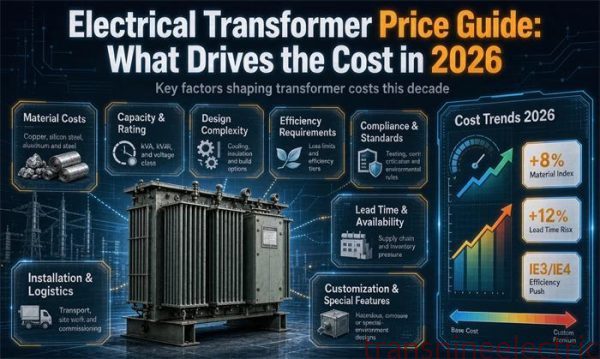
Electrical Transformer Price Guide: What Drives the Cost in 2026
Transformer prices in 2026 are driven by five things: rated capacity (kVA or MVA), voltage class, dry-type versus…
Read more →
Custom Transformer vs Off-the-Shelf: When Standard Ratings Don’t Fit
Standard ratings don’t fit when your voltage, frequency, kVA, site, or code requirement falls outside the catalog’s fixed…
Read more →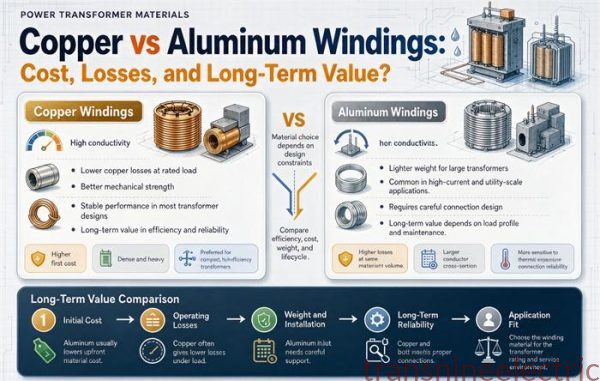
Copper vs Aluminum Windings: Cost, Losses, and Long-Term Value
Copper windings cost more up front but run with lower I²R losses and more forgiving connections. Aluminum windings…
Read more →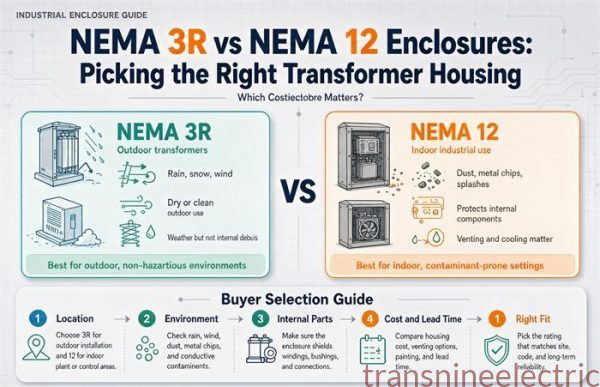
NEMA 3R vs NEMA 12 Enclosures: Picking the Right Transformer Housing
NEMA 3R and NEMA 12 are not two grades of the same protection. Type 3R is an indoor…
Read more →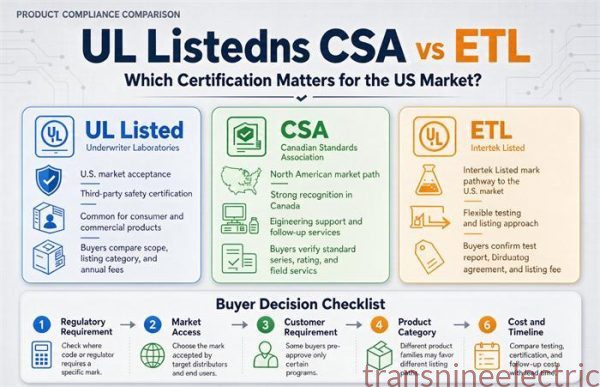
UL Listed vs CSA vs ETL: Which One Does the US Require?
For the US market, no single mark is legally required by name. OSHA requires products used in the…
Read more →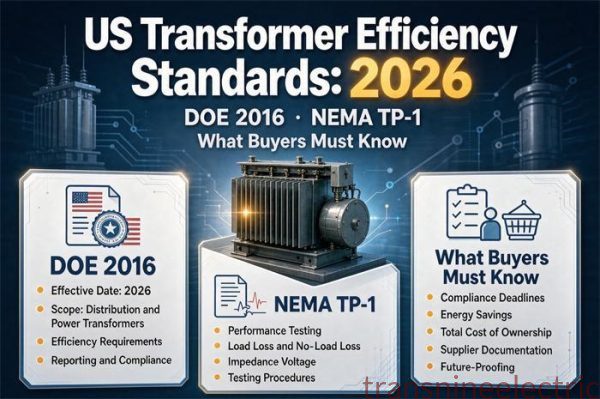
US Transformer Efficiency Standards 2026: DOE 2016, NEMA TP-1, and What Buyers Must Know
The US transformer efficiency standards that actually govern a 2026 purchase are the DOE 2016 rules (10 CFR…
Read more →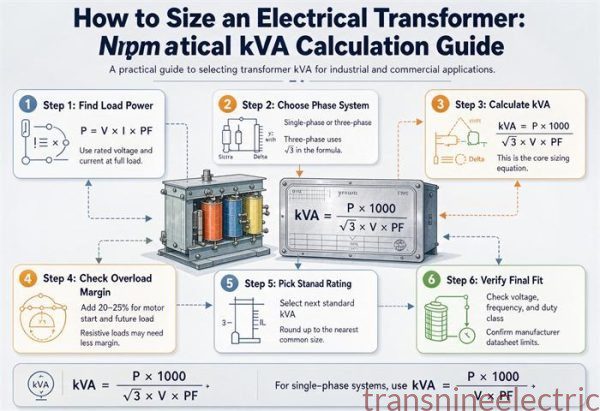
How to Size an Electrical Transformer: A Practical kVA Calculation Guide
If you are a buyer, an EPC, or a facilities manager in the US, Canada, or Europe, this…
Read more →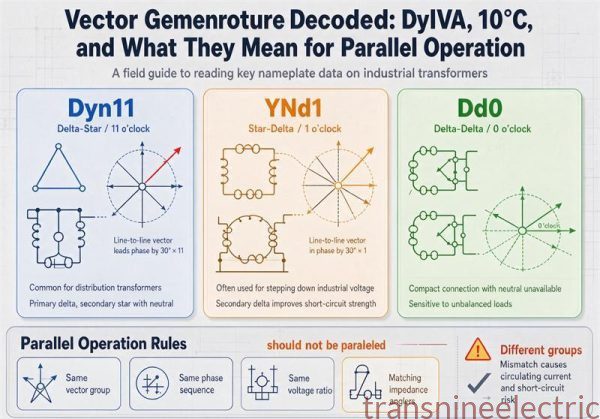
Vector Groups Decoded: Dyn11, YNd1, Dd0 and What They Mean for Parallel Operation
The transformer vector group is a nameplate code (like Dyn11, YNd1, or Dd0) that tells you how the…
Read more →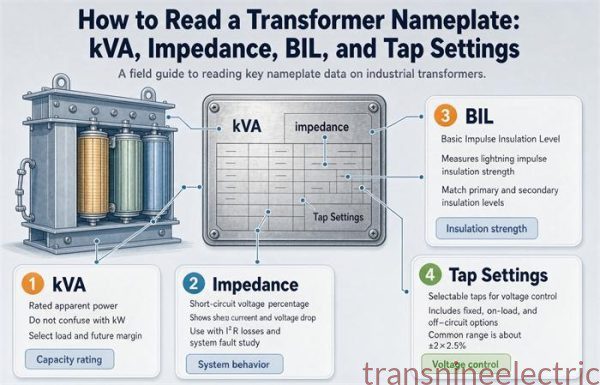
How to Read a Transformer Nameplate: kVA, Impedance, BIL, and Tap Settings
To read a transformer nameplate, check five fields in this order: the kVA rating (power capacity), primary and…
Read more →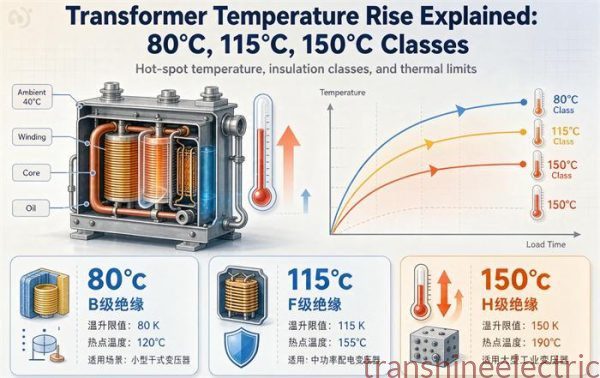
Transformer Temperature Rise Explained: 80°C, 115°C, 150°C Classes
Transformer temperature rise classes, 80°C, 115°C, and 150°C, are the maximum average winding temperature increases above a 40°C…
Read more →