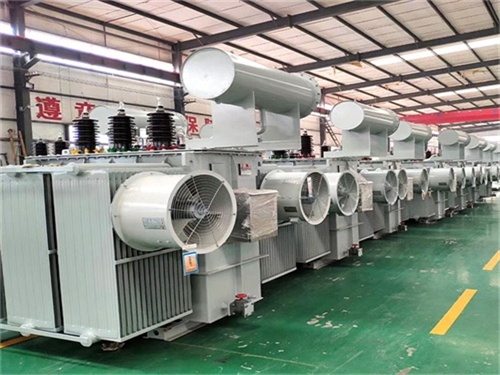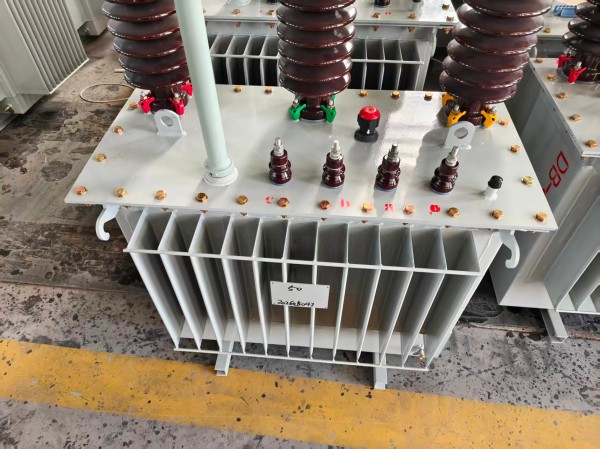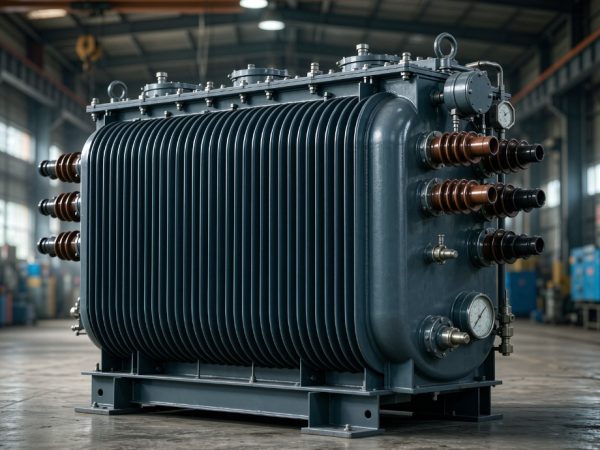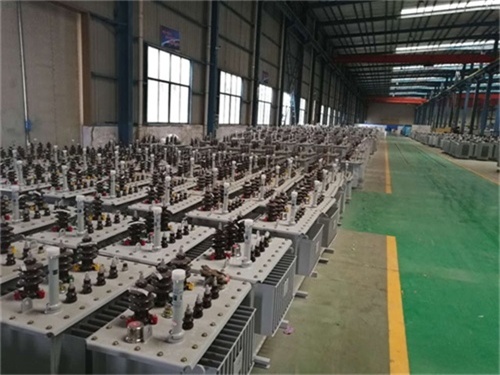
In manufacturing plants, industrial parks, large commercial complexes and renewable energy sites, the 1,600 kVA and 2,000 kVA oil-immersed transformer is the piece of equipment that everything downstream depends on. Both ratings carry high continuous load, hold voltage steady when motors start and welders fire, and deliver the lowest cost per kVA of any transformer type in this size range — which is why they are the default pick for mid-size to large factories, grid capacity upgrades and plant retrofit work. This guide covers where each rating fits, how the model series differ, what to put in a specification for a North American or IEC project, and the questions buyers ask before they sign.
Standards line: designed and routine-tested to IEC 60076-1 / -2 / -3 / -5, with IEEE C57.12.00 and C57.12.90 available for North American duty — confirm which edition applies to your project; efficiency declared under GB 20052 (China MEPS — confirm the current edition and the equivalent DOE 10 CFR 430 or EU Ecodesign tier for your target market); ISO 9001 / 14001 / 45001; certificates and type-test reports available on request.
1. Why Large-Capacity Oil-Immersed Units Fit Industrial Duty
Compared with a small distribution transformer, a 1,600 kVA or 2,000 kVA unit is sized for continuous, high-load, around-the-clock industrial service. Four things make it the right class of equipment for that job.
Continuous capacity without running at the edge
Industrial loads are not gentle. Extruders, compressors, presses, chillers and process heaters all run for hours at a time, and a plant that is adding a line rarely wants to replace the transformer at the same moment. A 1,600–2,000 kVA unit gives you headroom to absorb that growth while still running in the efficient part of its load curve, instead of sitting at 95% loaded and cooking its own insulation.
Stability under swinging, unpredictable load
Industrial loads swing hard and fast. Oil-immersed designs have high thermal mass and a liquid that moves heat away from the windings quickly, so they ride through inrush, motor starting and short-term overload far better than an equivalently rated air-cooled unit. That tolerance is what keeps a voltage dip from becoming a line stoppage.
Lowest cost per kVA, and the cheapest maintenance
Dollar for dollar, oil-immersed is the most economical way to buy capacity in this range, and the ownership side is better too: a sealed tank needs nothing more than periodic visual checks of oil level, seals and bushings. There is no filter change cycle, no forced-air fan to fail, and no sensitive epoxy casting to crack.
Goes outdoors, where the space is
The sealed tank is waterproof, dust-tight and corrosion resistant, so the unit can sit on an outdoor pad or pad-mounted position rather than consuming conditioned floor space inside the building. For brownfield plants where every square foot of indoor area is production, that is often the deciding factor.
2. Model Series, Efficiency and Voltage Ratings
The mainstream large-capacity oil-immersed families are the S11, S13, S20 and SH15 series. S11, S13 and S20 form a silicon-steel efficiency ladder — each step uses better core steel and a refined core and winding structure to push losses down. SH15 replaces the silicon-steel core with amorphous alloy, which cuts no-load loss dramatically.
The S13 and S20 designs are the current workhorses: high-permeability grain-oriented silicon steel in the core, all-copper windings, and an updated core and winding geometry that reduces both no-load loss and load loss. Compared with the legacy units they typically replace, manufacturers quote 20% or more lower total losses — confirm the measured no-load and load loss for the exact rating from the type-test report before you put that number in a business case. Our S20 series oil-immersed distribution transformer page covers the construction and rating range in detail.
Standard ratings are 10 kV primary / 0.4 kV secondary, and 35 kV primary is available as a custom build. For North American projects, translate those into the voltages your utility actually delivers:
| China standard | Typical North American equivalent |
|---|---|
| 10 kV | 12.47 kV or 13.8 kV primary distribution |
| 0.4 kV | 480Y/277 V (600Y/347 V in Canada) |
| 35 kV | 34.5 kV sub-transmission |
| 50 Hz | 60 Hz — must be declared at RFQ; it cannot be changed after the core is built |
Custom parameters — voltage, tapping range, impedance, cooling, terminal arrangement — are routinely built to order, so a non-standard site is not a problem as long as it is specified up front.
3. Technical Parameters
| Parameter | 1,600 kVA | 2,000 kVA |
|---|---|---|
| Rated capacity | 1,600 kVA | 2,000 kVA |
| Rated voltage (HV / LV) | 10 kV / 0.4 kV (35 kV, 13.8 kV, 34.5 kV on request) | 10 kV / 0.4 kV (35 kV, 13.8 kV, 34.5 kV on request) |
| Frequency | 50 Hz or 60 Hz — 60 Hz must be specified at RFQ | 50 Hz or 60 Hz — 60 Hz must be specified at RFQ |
| Phases | Three | Three |
| Vector group | Dyn11 | Dyn11 |
| Impedance voltage | Confirm per design — typically 4.5–6% for distribution duty | Confirm per design — typically 4.5–6% for distribution duty |
| No-load loss | Confirm per type-test report | Confirm per type-test report |
| Load loss (at 75 °C) | Confirm per type-test report | Confirm per type-test report |
| Cooling | ONAN (ONAF on request) | ONAN (ONAF on request) |
| Winding material | Copper | Copper |
| Tap changer | Off-circuit, ±2 × 2.5% (OLTC available) | Off-circuit, ±2 × 2.5% (OLTC available) |
| Insulating liquid | Mineral oil IEC 60296 (ester fluid on request) | Mineral oil IEC 60296 (ester fluid on request) |
| Tank | Hermetically sealed, corrugated | Hermetically sealed, corrugated |
| Standards | IEC 60076 / IEEE C57.12 — confirm applicable edition | IEC 60076 / IEEE C57.12 — confirm applicable edition |
If you are checking a quote against a nameplate, the fields to verify are rated power, voltages, vector group, impedance and the two loss values — all five are on the rating plate, and buyers most often misread impedance and tapping range.
4. Which Series to Buy — S13 vs S20 vs SH15
| Series | Core | Best fit | What you gain | What to watch |
|---|---|---|---|---|
| S13 | Grain-oriented silicon steel | General industrial duty, moderate load factor | Lower losses than legacy S11-era units at a modest premium | Load loss still dominates if you run near full load |
| S20 | Higher-grade silicon steel, refined core and winding | High load factor, long operating hours, ESG reporting | Lowest losses of the silicon-steel ladder | Higher first cost — justify it with a loss calculation, not a brochure claim |
| SH15 | Amorphous alloy | Lightly loaded or intermittently loaded feeders | No-load loss far below silicon steel | Amorphous saves core loss, not load loss — see the caveat below |
The honest caveat: amorphous alloy cuts no-load loss, which is the loss you pay for 8,760 hours a year regardless of load. It does very little for load loss, which scales with the square of your load. On a feeder that sits at 70–90% loading — which is exactly how a 2,000 kVA industrial unit usually runs — load loss dominates the lifetime energy bill, so the amorphous premium pays back far more slowly than it would on a lightly loaded rural feeder. Run the numbers for your own load factor before paying extra for SH15.
The calculation is worth doing in either case:
Annual loss energy ≈ (no-load loss × 8,760) + (load loss × load factor² × 8,760)
Illustrative only, using placeholder figures: a 2,000 kVA unit at 2.0 kW no-load loss and 18 kW load loss running at a 0.7 load factor gives roughly 17,500 + 77,300 ≈ 95,000 kWh per year, or about $9,500 per year at $0.10/kWh — replace every figure with your type-test values and your actual tariff before presenting it.
5. Built for Harsh Sites — Sealing, Cooling and Outdoor Duty
Hermetically sealed tank
The tank is fully sealed and corrugated, with no conservator and no breather. That means the oil never contacts outside air, so moisture and oxygen cannot get in, the insulation system does not age the way a breathing unit does, and there is no oil topping-up or silica-gel maintenance. In practice this is the single biggest reason a sealed oil-immersed unit outlasts an open-vented one in a dusty or humid plant.
Cooling that copes with full load
Heat is carried out of the windings by circulating oil and rejected through the tank walls — ONAN in normal service, with ONAF available where you want extra capacity on demand. The result is a unit that holds temperature rise within limits at continuous full load and tolerates overload events, which is precisely what metallurgy, chemicals, heavy manufacturing and building-materials plants need. Our explainer on transformer cooling classes — ONAN, ONAF, AN and AF goes through what each designation actually guarantees.
Outdoor installation without a dedicated room
Because the enclosure is waterproof, dust-tight, corrosion-resistant and UV-stable, the transformer can go on an outdoor platform or a ground-level pad and skip the sealed switchroom entirely. Two things to settle before you commit:
- North American outdoor duty: confirm enclosure and clearances against NFPA 70 (NEC) Article 450 and your local authority having jurisdiction — confirm requirements before ordering, and check whether your site trips the SPCC spill-prevention threshold based on aggregate oil volume. Our pad-mounted transformer buying guide is the practical reference for pad, clearances and access.
- Want it as one skid: if you would rather receive transformer, switchgear and protection pre-wired in a single enclosure, a YBW series prefabricated compact substation removes most of the civil work and the interface risk of building the yard on site.
6. Where 1600 kVA Fits — and Where 2000 kVA Does
1,600 kVA — the industrial workhorse
This is the standard choice for small and mid-size industrial parks, large single factories, shopping centers and concentrated residential distribution. It comfortably carries a mixed load of shop-floor equipment, central air conditioning, lighting and common services, and it is usually the main distribution unit on a mid-size project.
2,000 kVA — heavy industry, utilities and renewables
2,000 kVA sits in high-power distribution territory: large mining and metals operations, utility-scale solar and wind, wastewater treatment plants, large industrial parks and area grid substations. It is specified when many loads run simultaneously and production cannot stop, and its capacity and stability are a clear step above conventional small and mid-size units.
Two examples from our project case studies: inverter-duty step-up transformers for a 50 MW solar PV plant, engineered for harmonic-rich inverter output, and furnace and regulating duty on a steel plant modernization programme, where short-circuit withstand matters more than first cost. If 35 kV is your primary voltage rather than 10 kV or 13.8 kV, the 35 kV large-capacity oil-immersed power transformer guide covers ratings and specification for that class.
7. Oil-Immersed vs Dry-Type at 1,600–2,000 kVA
A lot of buyers get stuck on this comparison, and at this capacity the answer is fairly one-sided for outdoor industrial work.
| Factor | Oil-immersed | Cast-resin dry-type |
|---|---|---|
| First cost | Lower per kVA | Higher, and the gap widens with rating |
| Cooling | Liquid carries heat out efficiently | Air cooling; thermal margin is tighter under heavy load |
| Overload capability | Strong | More limited |
| Service life | Long, especially with a sealed tank | Long indoors, but sensitive to moisture and thermal cycling outdoors |
| Maintenance | Periodic visual checks — oil level, seals, bushings | Keep it clean and dry; no fluid to check |
| Best location | Outdoors, yards, heavy industrial | Indoor rooms, basements, hospitals, high-occupancy buildings |
| Fire and environment | Confirm containment, clearance and spill rules with your AHJ | No flammable fluid, no containment |
Dry-type earns its premium where people work close to the equipment and fire code is the binding constraint. For outdoor, high-load industrial distribution, oil-immersed wins on cost, cooling, overload and maintenance effort. Our oil-immersed vs dry-type selection guide walks through the decision properly, and there is a second consideration that often gets missed: above roughly 2,500 kVA or at 35 kV, dry-type becomes expensive and hard to source, so if your load forecast points upward, choosing a 2,000 kVA oil unit now keeps the upgrade path open.
8. Standards, Vector Group and Power Quality
Reputable builders supply these units with Dyn11 vector group as standard, which gives stable voltage transformation and useful harmonic behaviour: the delta primary gives third-harmonic and zero-sequence currents somewhere to circulate instead of pushing them back into the upstream network. That matters when you are feeding variable-frequency drives, rectifiers and other non-linear loads, because it protects sensitive production equipment from voltage disturbance and the resulting downtime.
Specify compliance explicitly. Quote IEC 60076 for global, EU and most Asian projects and IEEE/ANSI C57.12 for North America, and note that GB 20052 is a Chinese minimum energy performance standard — overseas buyers should ask for the IEC, DOE or EU Ecodesign loss parameters alongside it, and confirm which edition applies. Our comparison of IEC 60076 vs ANSI/IEEE standards for export transformers covers which one your project actually needs.
One counterintuitive point worth knowing: DOE efficiency rules cover distribution transformers, and liquid-immersed units above the covered rating range — or 60 Hz export units outside US scope — are not automatically held to a statutory efficiency number. For a large industrial unit, efficiency has to be locked down contractually: guaranteed no-load and load loss values, test tolerances per IEC 60076-1, and a penalty clause for missing them. Ask for routine test reports (ratio, winding resistance, insulation resistance, applied and induced voltage) on every unit before shipment.
9. Selection Checklist
- Measure before you specify. Pull 15-minute demand data for two to four weeks, apply a diversity factor, divide by power factor, then add 20–25% headroom. Do not size from connected load alone — that is how plants end up with an oversized unit that runs inefficiently.
- Choose the voltage you actually have. 12.47 kV, 13.8 kV or 34.5 kV primary; 480Y/277 V secondary; 60 Hz if you are in North America. Confirm with your utility, not with a catalog.
- Pick the series from the load factor, not from the price list. High load factor favors S20; light or intermittent load favors SH15.
- Specify copper windings, sealing, cooling class, impedance, tapping range and monitoring up front, and require type-test and routine-test evidence before release.
- Settle the site questions early — outdoor pad or compact substation, clearance and containment under NEC Article 450, and how the unit will be offloaded and set.
10. FAQ
Which is more common for a new plant — 1,600 kVA or 2,000 kVA?
1,600 kVA is the more common general-purpose size for mid-size parks and single large factories. Move to 2,000 kVA when several heavy loads run simultaneously, when you expect load growth, or when the unit feeds a utility-scale renewable or process plant. If your calculated demand lands between the two, take the larger unit only if the extra no-load loss is justified by the headroom you gain.
Can a 2,000 kVA oil-immersed transformer be installed outdoors without a substation building?
Yes, and it usually is. The sealed tank handles weather, dust and corrosion, so an outdoor pad or platform is standard practice. You still have to clear it with your AHJ: confirm NEC Article 450 clearances and any spill-containment threshold that applies to your site — confirm locally before ordering.
Is 10 kV / 0.4 kV usable in the United States?
US primary distribution commonly runs at 12.47 kV or 13.8 kV rather than 10 kV, and secondary utilization voltage is 480Y/277 V rather than 400/230 V. The transformer is built to whatever you specify — you just need to specify the voltages your utility and switchgear actually deliver, plus 60 Hz.
How much can I overload a 1,600 kVA or 2,000 kVA unit?
Oil-immersed units handle short-term and cyclic overload well because the oil gives thermal inertia, but the allowable amount depends on the pre-load, ambient temperature and duration. Specify the loading guide you want used — IEC 60076-7 or IEEE C57.91 — confirm which applies — and get the guaranteed overload envelope from the manufacturer in writing.
Oil-immersed or dry-type for a 2,000 kVA outdoor installation?
Oil-immersed, almost always. At this rating the dry-type premium is significant, thermal margin under heavy load is tighter, and the sealed oil tank handles outdoor conditions better. Choose dry-type when the unit must go indoors, in a basement, or in a high-occupancy building where fire code is the binding constraint.
What does a sealed tank actually save me in maintenance?
A hermetically sealed corrugated tank has no conservator and no breather, so the oil is never exposed to air. There is no oil topping-up, no silica-gel breather to service, and no moisture ingress to dry out. Routine work is a periodic visual check of oil level, gasket condition and bushings.
Will it protect sensitive equipment from harmonics?
The Dyn11 vector group gives third-harmonic currents a path to circulate in the delta winding instead of propagating upstream, and the standard impedance limits fault current. If you have large drives, rectifiers or furnaces, size for the harmonic spectrum and consider a K-factor or dedicated unit — tell the manufacturer your non-linear load mix at RFQ so impedance and winding design can be set accordingly.
What information do you need to give me a quote?
Rated capacity (1,600 or 2,000 kVA), primary and secondary voltage, frequency (50 or 60 Hz), vector group, impedance, tapping range, indoor or outdoor installation, ambient and altitude conditions, load profile and harmonic content, applicable standard (IEC or ANSI/IEEE), quantity, and target delivery location. A one-line diagram gets you the most accurate number.