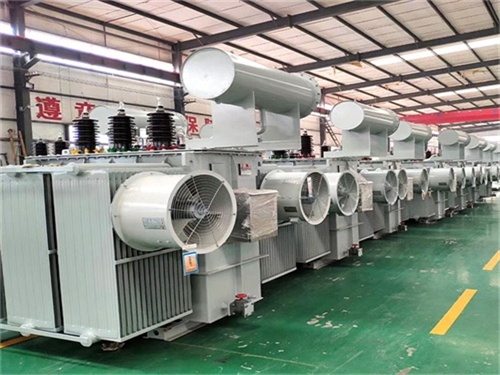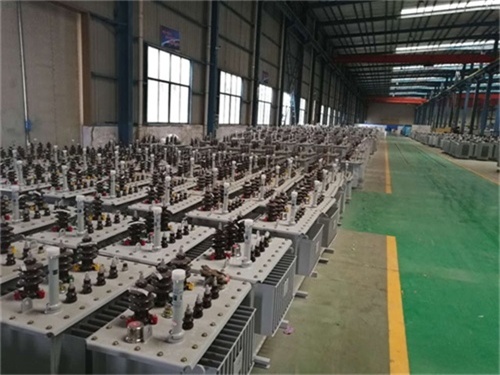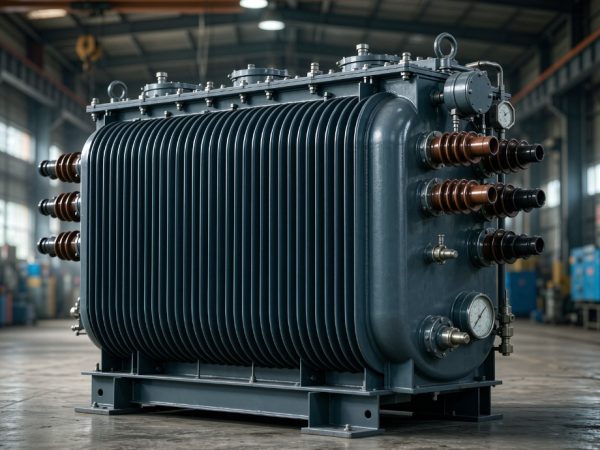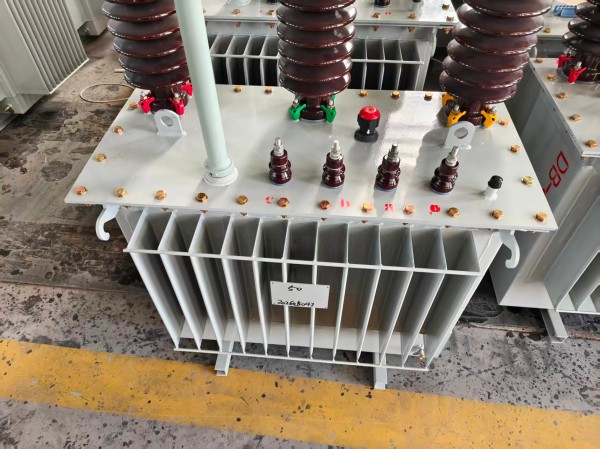
A 35 kV large-capacity oil-immersed power transformer is the piece of equipment that decides whether the rest of a substation behaves itself. In transmission and distribution substations, industrial parks, renewable power plants, and large mining or metals sites, the main transformer does the heavy lifting: stepping voltage down, holding it steady while load moves around, and feeding everything downstream. Compared with an ordinary distribution transformer, a 35 kV main unit carries far more capacity, stands up to higher dielectric stress, and runs more predictably over decades — which is why it turns up on grid upgrade programs, renewable interconnection projects, and heavy industrial capital works. This guide covers the ratings that matter, what the performance numbers actually mean, where these units get installed, and how to write a specification you can defend internally.
Built and tested to GB 1094 / GB/T 6451 with GB 20052 energy efficiency (harmonized with IEC 60076) · IEC 60076 or ANSI/IEEE C57.12 designs available on request · Routine tests on every unit, type-test evidence per design · ISO 9001 / 14001 / 45001 [待确认:证书编号与现行版本核实后填写 / confirm certificate numbers and current standard editions] · 6,300–31,500 kVA · 35/10.5 kV · ONAN · hermetically sealed
1. The Ratings You’ll Actually Specify
The mainstream rating band for a 35 kV large-capacity oil-immersed main transformer is 6,300 kVA to 31,500 kVA, which covers the bulk of transmission and distribution project requirements. Non-standard capacities above that band can be built to order where a project calls for it.
Standard rated voltage ratio is 35 kV / 10.5 kV. Voltage regulation is available two ways:
- ±5% off-circuit (no-load) tap changer — a simple, low-cost, low-maintenance option for grids where voltage stays reasonably stable and you can afford to de-energize for a tap change.
- ±3 × 2.5% on-load tap changer (OLTC) — regulation under load, in nine positions, for networks with wide voltage swings or continuous-process loads that cannot be interrupted.
Rated frequency is 50 Hz as standard. Vector group is normally Ynd11 or Yd11, which gives good harmonic suppression and stable power quality on high-voltage transformation duty.
Two notes for buyers working outside a 50 Hz market. First, if your project is on a 60 Hz grid, say so at enquiry stage — frequency drives core design, losses, and impedance, and it is not something to retrofit later. Second, in North America the nearest standard primary class to 35 kV is 34.5 kV, so a US or Canadian specification will usually be written around 34.5 kV and ANSI/IEEE rules rather than a literal 35 kV. If you are specifying off a Chinese or IEC-based datasheet for a North American project, that translation step is worth doing up front. For a field-level walk through of what each rating on the nameplate means, see how to read a transformer nameplate and technical parameters, and for the regulating option specifically, the SZ11 on-load voltage regulating transformer covers the OLTC construction in detail.
2. Performance Numbers That Decide Whether the Unit Survives
Three parameters do most of the work in a technical evaluation: short-circuit impedance, losses, and insulation level.
Short-circuit impedance for this class sits at 6%–8%. That is deliberately higher than a distribution transformer’s 4%–6%, because it limits prospective short-circuit current and protects switchgear, cables, and motors downstream. When you write the spec, state the impedance with a tolerance — it directly affects fault levels, voltage regulation, and parallel operation with any existing transformer.
Losses are where the money is. A low-loss grain-oriented silicon steel core, optimized core geometry, and vacuum oil filling keep both no-load and load losses down. Representative figures:
| Rating | No-load loss | Load loss (at 75 °C) |
|---|---|---|
| 16,000 kVA | 6.7 kW | 59.2 kW |
| 20,000 kVA | 7.9 kW | 71.6 kW |
These designs meet Grade 1 energy efficiency under China’s GB 20052 minimum energy performance standard. Over a 20-year service life, the no-load loss runs 8,760 hours a year whether the transformer is loaded or idle, so it usually dominates lifetime cost on a main transformer that sits energized continuously. Confirm the exact figures against the approved type-test report and the nameplate for the specific unit you are tendering, and pin them in the contract with tolerance and penalty clauses — a stated loss value that isn’t contractually binding is worth nothing. Full rating tables are on the S20 series oil-immersed distribution transformer page.
Insulation level is LI 200 kV / AC 85 kV (200 kV BIL), which is what lets the unit ride through lightning and switching surges on exposed outdoor busbar without insulation breakdown. Where your site has a high lightning flash density or long overhead line exposure, review the BIL against your own insulation coordination study rather than accepting the catalog value by default.
3. Cooling and Sealing: Built for Unattended Duty
These units use ONAN cooling — oil natural, air natural. Oil circulates by convection and dissipates heat through the tank and radiators, with no external cooling fans. Fewer moving parts means lower noise, a lower failure rate, and no fan controllers to maintain, which is exactly what you want on a site that runs continuously for years between visits.
The tank is fully sealed (hermetically sealed construction). Quality insulating oil and precision sealing components keep moisture and dust out of the active part, so the core and windings don’t absorb humidity and age prematurely, and the oil-leak failure mode that plagues gasketed, conservator-type designs largely disappears. There is no conservator and no breather to service.
Overload capability is another reason this construction suits grid and renewable duty. The transformer will carry short-term overload during evening peaks, motor starting, or a cloud-driven dip and spike in PV output, and return to normal without tripping. Cooling class, hot-spot limits, and the loading guide you specify against all matter here — IEC 60076-7 is the usual reference for oil-immersed loading.
4. Oil-Immersed vs. Dry-Type at 35 kV
Dry-type transformers win indoors on fire safety and have their place in buildings, hospitals, and data halls. At 35 kV and above roughly 6 MVA, oil-immersed is the stronger engineering and commercial answer.
| Decision factor | Oil-immersed (35 kV class) | Dry-type (cast resin) |
|---|---|---|
| Capacity ceiling | 6,300–31,500 kVA and up | Practical limit well below this at 35 kV |
| Cooling efficiency | Oil carries heat away far more effectively | Air cooling limits size and loading |
| Outdoor performance | Sealed tank handles rain, dust, salt, altitude | Needs an enclosure; derates in hot/sun-exposed sites |
| Capital cost per kVA | Lower at this rating | Higher, and rises steeply with size |
| Maintenance | Very low with hermetic sealing | Very low |
| Fire and environmental | Requires oil containment and spill planning | No oil — the reason to choose dry-type |
| Service life | 20+ years with normal maintenance | Comparable in benign indoor environments |
The honest trade-off: oil-immersed brings a flammable liquid on site, so you need bunding, spill containment, and a fire strategy. That is a manageable, well-understood requirement for an outdoor substation, and it is much cheaper than the premium you would pay to get the same capacity in cast resin.
5. Where These Units Get Installed
- Utility and grid substations — primary step-down, grid reinforcement, and replacement of aging capacity. Long continuous run times and unattended operation favor the sealed ONAN design.
- Industrial parks and heavy industry — large motors, process loads, and wide daily load swings. Overload capability and high impedance for fault limiting are the deciding factors.
- Solar PV and battery storage plants — inverter duty with harmonic-rich output and sharp daily load cycling. Our step-up transformer package for a 50 MW solar PV plant shows what that duty looks like in the field.
- Water conservancy and hydropower — remote sites where maintenance access is expensive and reliability matters more than capital cost.
- Mining and large infrastructure — harsh, dusty, high-altitude, or humid-tropical sites.
The tanks are treated for corrosion and moisture resistance, so the units hold up on plateaus, in hot humid coastal climates, and in windy, sandy locations. Expected service life is 20 years or more under normal maintenance.
If you are building an outdoor substation rather than just buying a transformer, the YBW series prefabricated compact substation integrates the 35 kV transformer, switchgear, and protection into a single factory-tested unit — often the faster route to energization than conventional civil construction.
6. Selection and Purchasing: A Short Checklist
Before you issue an enquiry, lock down these five items. Getting them wrong is what causes late redesign and change orders.
- Capacity — size from a measured or modeled demand profile (connected load, diversity factor, peak demand, planned expansion), not from a rule of thumb. Most projects carry 10–20% headroom, or plan for N-1 on critical sites.
- Tap changer — if load swings frequently or the process cannot be de-energized, spend the money on an OLTC. For routine grid refits and industrial distribution with stable voltage, an off-circuit tap changer is the better value.
- Impedance — specify it with tolerance and check it against your fault-level study and any parallel operation with existing units.
- Loss values and how they are verified — require type-test evidence, and write tolerance and penalty terms into the contract.
- Site conditions — altitude, ambient temperature range, humidity, salt or industrial pollution, seismic zone, and enclosure requirements. Altitude and temperature both drive derating.
Our 2026 power transformer buying guide goes through each of these in more depth, and you can compare the full lineup on the transformer products page.
7. Standards, Testing, and Documentation
Production units are built and tested to the Chinese national standard framework — GB 1094 and GB/T 6451 for power transformers, GB 20052 for energy efficiency — which is harmonized with IEC 60076. Where a project calls for it, designs can be specified to IEC 60076 or the ANSI/IEEE C57.12 series; the requirement should be stated in the enquiry, not discovered at FAT.
What to require in the documentation package:
- Routine test reports on every unit: winding resistance, voltage ratio and vector group check, insulation resistance, applied and induced voltage tests, no-load and load loss measurement.
- Type-test evidence for the design, including temperature rise and — for the short-circuit claim — lightning impulse and short-circuit withstand testing.
- Factory acceptance test (FAT) attendance, plus on-site commissioning support.
- Quality system certification (ISO 9001 / 14001 / 45001) and mill certificates for core steel and windings.
For North American projects, note that U.S. DOE efficiency rules under 10 CFR 430 cover distribution transformers (liquid-immersed units are generally up to 2,500 kVA), so a 6,300–31,500 kVA power transformer typically falls outside that scope — efficiency then becomes a contractual specification rather than a regulatory one, which makes item 4 in the checklist above more important, not less.
8. Bottom Line
Low losses, high insulation strength, real overload capability, and near-zero routine maintenance make the 35 kV large-capacity oil-immersed main transformer the default choice for high-voltage transmission and distribution work. Specify the ratings carefully, hold the supplier to tested loss figures, and the unit will run for two decades with minimal attention — which is the whole point.
Next steps: download the full specification sheet for your rating, run the loss figures against your actual load profile to see the 20-year energy cost, then send us your single-line diagram, load list, and site conditions for a budgetary quote.
Our technical resource library has the deeper engineering references, and the project case studies show how these units perform in service.
Frequently Asked Questions
What capacity should I pick — and how do I know I’m not over- or under-sizing?
Work from a demand profile, not from floor area or a rule of thumb. Take connected load, apply a realistic diversity factor, add planned expansion, and check the result against your peak demand history if you have it. Most projects land with 10–20% headroom. If you are running two transformers and need to survive losing one, size for N-1. Oversizing isn’t free either: you pay more capital and, depending on the design, may carry higher no-load loss for capacity you never use.
Off-circuit tap changer or on-load tap changer?
If your load swings frequently, the grid voltage moves a lot, or the downstream process cannot be de-energized for a tap change, an OLTC (typically ±3 × 2.5%, nine positions) is worth the money. For routine grid refits and industrial distribution where voltage is stable, the ±5% off-circuit tap changer costs less, has fewer moving parts, and is the better value.
Is ONAN cooling enough, or do I need ONAF?
ONAN is sufficient for the large majority of 35 kV main transformers and is the quieter, more reliable choice because there are no fans to fail. Step up to ONAF (forced air) only when your load profile genuinely exceeds the natural-cooling rating for meaningful periods, or where you need extra overload margin. If you do, remember the fans add noise when they run.
How much do the losses actually cost over 20 years?
No-load loss runs 8,760 hours a year regardless of loading; load loss scales with the square of the load factor. For a 20,000 kVA unit at 7.9 kW no-load and 71.6 kW load loss, running at a 60% average load factor: no-load is about 69,200 kWh/year, load loss roughly 226,000 kWh/year, so around 295,000 kWh/year combined. At USD 0.10/kWh that is about USD 29,500 a year, or roughly USD 590,000 over 20 years before considering energy price escalation — several times the purchase price of the transformer. Run the same arithmetic with your own load factor and tariff before you award.
Will it handle renewable intermittency and peak overload?
Yes, within its loading limits. These units tolerate short-term overload during peak demand, motor starting, and the rapid output swings that come with PV and storage. Specify the loading duty you expect (daily cycling profile, harmonic content from inverters) at enquiry stage so the thermal design and insulation ageing assumptions match reality.
What standards does it meet, and can you build to ANSI/IEEE for a North American project?
Standard production is built and tested to GB 1094 / GB/T 6451 with GB 20052 energy efficiency, harmonized with IEC 60076. North American projects typically call for the ANSI/IEEE C57.12 series, 60 Hz, and a 34.5 kV class primary rather than 35 kV. Our comparison of IEC 60076 vs ANSI/IEEE standards for export transformers explains where the requirements diverge; state the target standard in your enquiry so it is designed in rather than retrofitted.
Does “fully sealed” really mean maintenance-free?
Not literally zero, but close. A hermetically sealed tank has no conservator, no breather, and no oil changes on a routine cycle. In practice the program is periodic visual inspection, infrared scanning of terminations, occasional oil testing if you want trend data, and keeping the radiators and bushings clean. Budget a few hours a year.
What do you need from me to quote?
The single-line diagram or a description of the incoming and outgoing voltage levels, your demand profile or connected load with diversity, altitude and ambient temperature range, required tap changer type, target impedance, applicable standard (IEC or ANSI/IEEE), and any enclosure or noise requirements. With those, a budgetary quote with loss figures and a delivery estimate can usually be turned around quickly.