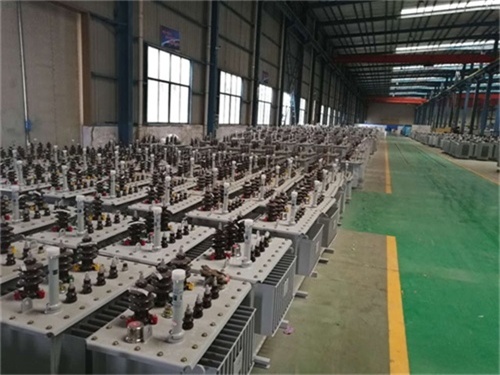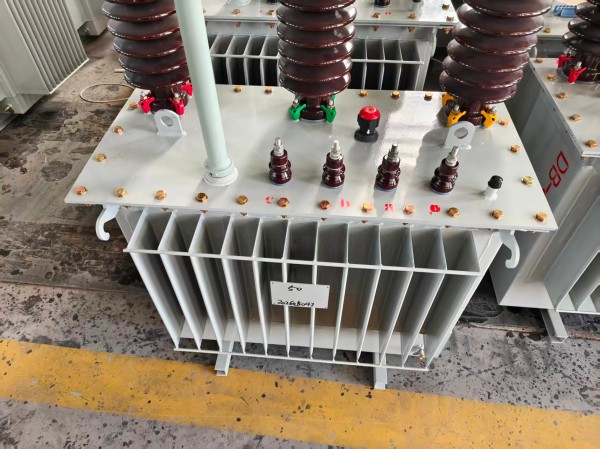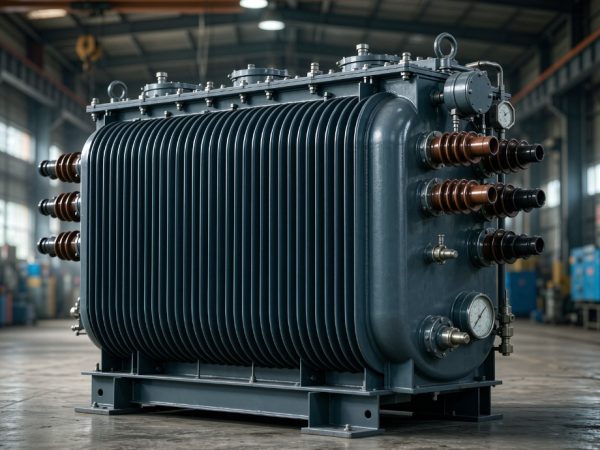
The S20 is the current high-efficiency tier of China’s three-phase oil-immersed distribution transformer family: a hermetically sealed, oil-filled unit covering 30 kVA to 31,500 kVA at 6, 10, 20 and 35 kV. Against the S13 design it replaces, builders typically quote about 10% lower no-load loss and about 20% lower load loss, which is the whole reason it exists. This guide covers what the S20 actually changes inside the tank, the parameters to put on a specification, where each rating fits, what the efficiency step is worth in dollars, and the questions buyers ask before they sign.
Standards line: designed and routine-tested to IEC 60076-1 / -2 / -3 / -5, with IEEE C57.12.00, C57.12.10 and C57.12.90 available for North American duty — confirm which edition applies to your project; efficiency declared under GB 20052 (China MEPS — confirm the current edition and the equivalent DOE 10 CFR 430 or EU Ecodesign tier for your target market); ISO 9001 / 14001 / 45001; type-test and routine-test reports available on request.
1. Why Plants Specify S20 for Industrial Duty
Four things separate an S20 from the S11 and S13 units it is replacing on industrial sites.
Lower losses where the meter actually sees them
Industrial transformers run 24/7, and the losses run with them. No-load loss is billed every hour of every year whether the plant is making product or not, so the better core steel pays for itself on nothing but time. Load loss is billed on the square of the load, so it dominates when the unit is worked hard. The S20 improves both, which is unusual — most efficiency steps trade one against the other.
A core and winding package built for fault duty
The core is stacked from high-grade cold-rolled grain-oriented silicon steel, which lowers exciting current and audible hum, and the windings are wound from oxygen-free copper for conductivity and short-circuit strength. The HV and LV windings are built as interleaved sections — the Chinese source describes a five-section HV against four-section LV arrangement; confirm the winding layout against the design drawing for your rating — with spiral or mesh insulation that opens up cooling surface and raises the current the winding can carry continuously.
Sealed for hostile sites
A fully sealed tank with no conservator and no breather means the oil never meets outside air: no moisture ingress, no oxidation, no silica-gel to service, no topping up. That is what makes the unit a fit for humid, dusty, coastal and chemically aggressive sites, and the enclosure is quoted at IP44 under IEC 60529 — confirm the degree of protection for the exact enclosure and terminal box you are buying; outdoor pad-mounted duty and indoor vault duty are not the same bill.
One family from a small feeder to a substation main
Because the range covers 30 kVA to 31,500 kVA across four voltage classes, a plant can standardize on one series — one set of spare parts, one protection philosophy, one commissioning procedure — from the small 100 kVA building feeder up to the 8,000 kVA intake. Start with the S20 series oil-immersed distribution transformer for the construction detail, or the wider oil-immersed transformer range if you are still deciding between series.
2. Technical Parameters
| Parameter | Specification |
|---|---|
| Type | Three-phase, oil-immersed, hermetically sealed |
| Rated capacity | 30 kVA – 31,500 kVA |
| Primary voltage classes | 6 kV, 10 kV, 20 kV, 35 kV |
| Secondary voltage | 0.4 kV standard (others on request) |
| Frequency | 50 Hz standard — 60 Hz must be declared at RFQ; it cannot be changed after the core is built |
| Short-circuit impedance | 4% – 5% |
| Vector group | Dyn11 |
| Insulation system | Class F (155 °C) — a few configurations are quoted as Class A; confirm the insulation system and the guaranteed temperature rise |
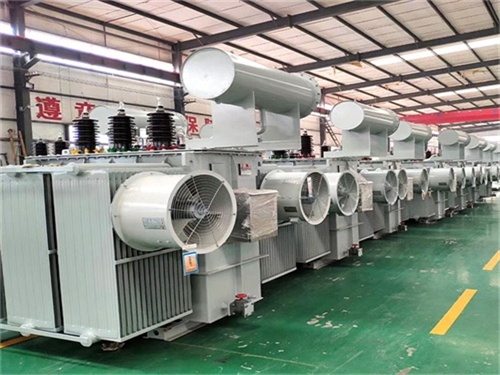
| Cooling | ONAF (oil natural, air forced) as quoted — most sealed S20 distribution units ship as ONAN; ONAF adds fans and a second, higher rating. Confirm which cooling class and which kVA rating the quotation is built on |
| Windings | Oxygen-free copper |
| Core | Cold-rolled grain-oriented silicon steel |
| Ambient temperature | −25 °C to +40 °C — sites below −25 °C or above +40 °C need a special design; say so at RFQ |
| Altitude | ≤ 1,000 m — above this, derate per IEC 60076-2 |
| Humidity | Up to 90% monthly average at 20 °C |
| Standards | IEC 60076 series; IEEE/ANSI C57.12 on request; efficiency to GB 20052 |
Two translations matter if you are specifying for a North American site, because the Chinese ratings will not match your switchgear:
| China standard rating | Typical North American equivalent |
|---|---|
| 6 kV | 4.16 kV or 7.2 kV |
| 10 kV | 12.47 kV or 13.8 kV primary distribution |
| 20 kV | 24.94 kV (24.9 kV class) |
| 35 kV | 34.5 kV sub-transmission |
| 0.4 kV | 480Y/277 V (600Y/347 V in Canada) |
| 50 Hz | 60 Hz — must be specified at RFQ |
Our transformer cooling classes explained (ONAN, ONAF, AN, AF) guide covers what each four-letter code actually commits the manufacturer to — worth reading before you accept a two-rating quote.
3. S20 vs. S13 vs. S11 — What the Step Actually Buys
S11, S13 and S20 are a silicon-steel efficiency ladder: each step uses better core material and a refined core-and-winding geometry to push losses down, and each step costs more to build.
| Factor | S11 | S13 | S20 |
|---|---|---|---|
| Core | Standard grain-oriented steel | Higher-grade steel, stepped-lap core | Highest grade, refined joint and clamping |
| No-load loss | Baseline | Materially below S11 | Typically about 10% below S13 — confirm per type-test report |
| Load loss | Baseline | Improved | Typically about 20% below S13 — confirm per type-test report |
| Windings | Copper or aluminium depending on build | Copper | Oxygen-free copper |
| First cost | Lowest | Mid | Highest of the three |
| Best fit | Standby or intermittent duty | General distribution | High load factor, 24/7 process load |
The step that matters is S13 → S20, and it is not free. See the cost math in Section 6 before you assume the premium pays back on your load profile.
4. Typical Ratings
| Model | Rated capacity | Primary voltage | Where it lands |
|---|---|---|---|
| S20-100 kVA | 100 kVA | 10 kV (12.47/13.8 kV for NA) | Small plant, workshop or commercial panel; all-copper build |
| S20-2,500 kVA | 2,500 kVA | 10 kV (12.47/13.8 kV for NA) | Large industrial park or plant substation — the most quoted rating in the family |
| S20-8,000 kVA | 8,000 kVA | 35 kV (34.5 kV for NA) | High-voltage industrial intake or utility sub-transmission |
Above about 2,500 kVA, the engineering changes character: you are buying a power transformer, not a distribution transformer, and everything from impedance to protection to transport weight has to be engineered rather than selected. Our guide to 35 kV large-capacity oil-immersed power transformers covers that territory.
5. Where S20 Earns Its Keep
Heavy industry. Steel, chemicals, cement and mining are hard duty: high continuous load, big motor starts, and fault currents that punish weak windings. The S20’s current-carrying margin and short-circuit withstand are what keep a dip from becoming a stoppage. We have supplied furnace and regulating transformers for a steel plant modernization program under exactly that kind of duty cycle.
Industrial parks and centralized distribution. A 2,500 kVA or 8,000 kVA S20 feeding a park distribution network beats a scatter of small units on both losses and maintenance hours, and it puts the capacity expansion point in one place.
Commercial and residential. Malls, offices and residential blocks benefit from the quieter core and the sealed tank — no oil handling inside an occupied building, and a lower bill on the common-area supply.
Infrastructure. Metro, airports, rail terminals and oilfields all combine humidity, dust and vibration. The sealed tank and the −25 °C to +40 °C envelope are designed for that combination. Rural grid work and remote sites lean on the same wide temperature range.
For the full set of application write-ups and reference cases, see the project case study library. And if your constraint is fire code or an indoor room rather than weather, read oil-immersed vs dry-type: how to choose first — on an indoor, high-occupancy site, a cast-resin unit is often the right answer and the S20 is not.
6. Cost, Payback and the Loss Math
Do not accept a percentage. Convert it to dollars with two numbers that hold regardless of who built the unit:
Annual loss energy = P₀ × 8,760 + P_load × LF² × 8,760
where P₀ is no-load loss in kW, P_load is load loss at rated current in kW, and LF is your average load factor.
At a 60% load factor and $0.10/kWh, one kilowatt of no-load loss costs about $876 a year (1 kW × 8,760 h) and one kilowatt of load loss costs about $315 a year (1 kW × 0.6² × 8,760 h). If a 2,500 kVA quotation shows 0.3 kW less no-load loss and 4 kW less load loss than the S13 alternative — confirm both values on the type-test report; a percentage is not a number you can put in a business case — that is roughly 0.3 × $876 + 4 × $315 ≈ $1,520 a year, and the payback is the quoted premium divided by that figure. Chinese builders quote three to five years. That holds up at industrial tariffs above roughly 50–60% load factor; on a lightly loaded or single-shift line, stretch it out before you sign.
Two counterintuitive points that catch buyers out:
- Light load favors the better core; heavy load does not. Where the unit sits at 30% load, no-load loss is most of the bill and the S20 premium pays back fastest. Where it sits at 90% load, load loss dominates — and then the thing worth paying for is guaranteed load loss and a lower winding temperature rise, not a lower core loss.
- Above 2,500 kVA there may be no statutory efficiency floor to lean on. DOE 10 CFR 430 covers liquid-immersed distribution transformers within its rating scope; an 8,000 kVA 35 kV main falls outside it. If efficiency matters on that unit, it has to be written into the contract: guaranteed no-load and load loss in kW, test tolerance per IEC 60076-1, and a penalty for missing the guarantee. Otherwise “high efficiency” is a marketing word with nothing behind it.
7. Standards, Protection and What to Write Into the Contract
The Dyn11 vector group is standard and it does real work: the delta primary gives third-harmonic and zero-sequence currents somewhere to circulate instead of feeding them back upstream, which protects sensitive drives and controls on a harmonic-rich industrial bus. One caution — North American distribution practice commonly uses Dyn1 rather than Dyn11. Confirm the vector group your utility and your existing fleet use, because two units with different vector groups cannot be paralleled.
On compliance, name the standard explicitly. Quote IEC 60076 for global, EU and most Asian projects and IEEE/ANSI C57.12 for North America, and remember that GB 20052 is a Chinese minimum energy performance standard — overseas buyers should ask for the IEC, DOE or EU Ecodesign loss parameters alongside it. Our comparison of IEC 60076 vs ANSI/IEEE standards for export transformers sets out which one your project needs.
Note also what a sealed tank changes about protection: with no conservator there is nowhere to fit a Buchholz relay, so fault protection comes from a pressure-relief device plus optional oil-level, pressure and temperature monitoring. Confirm the protection and monitoring package with your AHJ and your protection engineer; NEC Article 450 clearances and any spill-containment threshold are local questions.
8. Selection Checklist
- Measure before you specify. Pull 15-minute demand data for two to four weeks, apply diversity, divide by power factor, add 20–25% headroom. Sizing from connected load is how plants end up oversized and inefficient.
- Match the voltage to the grid you have. 12.47 kV, 13.8 kV or 34.5 kV primary; 480Y/277 V secondary; 60 Hz. Confirm with the utility, not with a catalog.
- Pick the series from the load factor, not from the price list — see Section 6.
- Fix cooling, impedance, vector group, tapping range and monitoring in the RFQ. ONAF versus ONAN changes the rating, the noise and the maintenance list.
- Declare the site conditions: ambient range, altitude above 1,000 m, indoor or outdoor, corrosion class, seismicity.
- Require the test evidence: type test for the design, routine test on every unit, witnessed FAT for units above roughly 2,500 kVA.
- Vet the builder on seven things: standards fit, verifiable test evidence, auditable quality system, real capacity at your rating, export experience into your market, commissioning support, and warranty terms in writing. The Chinese source names two domestic makers (江苏巨力 / 河南地特力) as options — omitted here by default, because naming competing factories on your own site sends the buyer off your page. Add them only if the page is a neutral comparison.
9. FAQ
What does “S20” actually mean?
It is a Chinese model designation: “S” for three-phase oil-immersed, “20” for the performance tier in the national efficiency ladder — not an IEC or IEEE class. Overseas buyers should not buy the code; they should buy the numbers. Ask for guaranteed no-load loss and load loss in kW on the type-test report, and compare those against the standard your market recognizes.
Is S20 the same as a DOE-compliant or EU Ecodesign-compliant transformer?
No. A GB 20052 Grade 2 declaration is the Chinese minimum energy performance standard. For the US you need DOE 10 CFR 430 (within its rating scope) plus IEEE C57.12.00, and UL or CSA listing where the AHJ requires it — certificates: available on request; confirm what is actually held for your target market. For the EU, ask for the PEI calculation under Ecodesign 2019/1783.
Can it run on 60 Hz?
Yes, but say so at RFQ. Frequency is locked once the core is built, and it drives core losses, impedance, inrush and — on ONAF units — the fan motors. A 50/60 Hz dual-rated design is routine; a 50 Hz-only unit is not a 60 Hz unit.
Is 10 kV / 0.4 kV usable in the United States?
US primary distribution is commonly 12.47 kV or 13.8 kV and secondary utilization is 480Y/277 V (600Y/347 V in Canada). The transformer is built to whatever you specify, so specify what your utility and switchgear actually deliver.
ONAN or ONAF — which one am I being quoted?
Ask directly. ONAN is the natural-convection base rating. ONAF adds radiator fans and a second, higher kVA rating — typically 133% of the ONAN figure — and it brings fan motors, controls and a few extra decibels with it. On a noise-sensitive or lightly loaded site, buying the next size up in ONAN is often the better lifetime deal.
Where does IP44 actually apply?
Confirm the degree of protection for the specific enclosure and terminal box you are buying. IP44 under IEC 60529 covers splashing water and solid objects above 1 mm; it is not a substitute for specifying corrosion class, coating system and—for pad-mounted duty—tamper resistance.
How much maintenance does a sealed unit need?
Very little: periodic visual checks of oil level, gasket condition, bushings and paint. There is no conservator, no breather and no silica gel to service. Fan bearings and controls become the maintenance item if you specify ONAF.
What happens above 1,000 m altitude or above 40 °C ambient?
Both reduce the cooling margin and the dielectric margin, so the unit has to be derated or redesigned. IEC 60076-2 gives the altitude correction; high-ambient sites need it stated at RFQ so the winding temperature rise can be guaranteed under your conditions.
What do you need to quote me?
Rated capacity, primary and secondary voltage, frequency, vector group, impedance, cooling class, tapping range, indoor or outdoor, ambient and altitude, load profile and harmonic content, applicable standard, quantity, destination port — and a one-line diagram if you have one. That last item is what turns a budget price into a real one.
10. The Bottom Line
The S20 is the right default for 24/7 industrial distribution: lower losses than the S13 it replaces, an all-copper winding and sealed-tank construction that suits hard sites, and one product family that runs from 100 kVA to 31,500 kVA. It is not automatically the right answer for an indoor, fire-code-driven installation, and it is not automatically worth the premium on a light or intermittent load — run the loss math first.
Next steps: browse the transformer product catalog to compare series and ratings, pull the sizing and standards guides from the technical resource library, then send your one-line diagram and demand data to the engineering team for a sizing review and a firm quotation with guaranteed loss values.