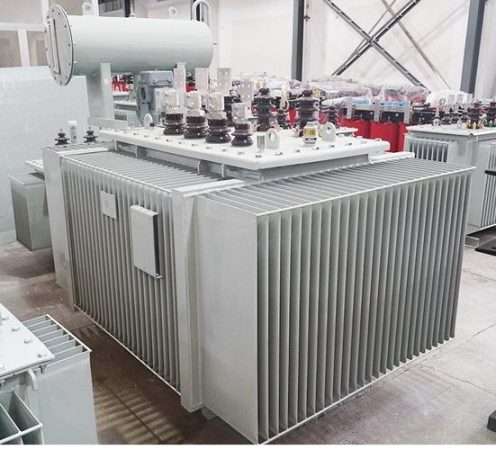
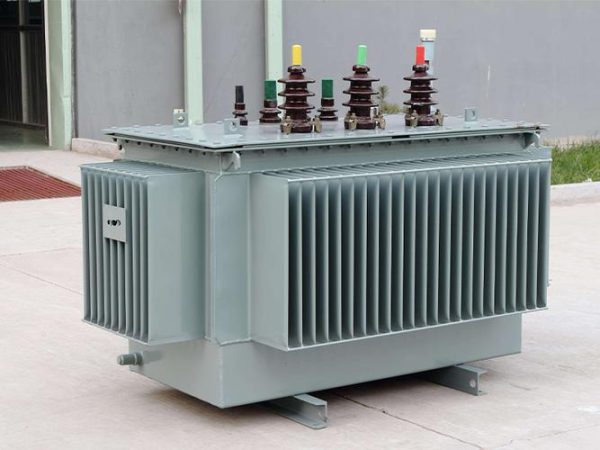
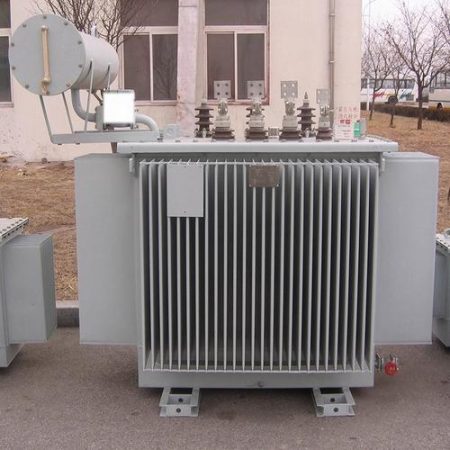
If you are pricing this rating, bring your load list and your one-line diagram. Our application engineers will size it against your actual demand, return guaranteed loss figures rather than catalogue numbers, and confirm whether the S13 tier or a step up to S20 makes the better 20-year bet. Everything below is the reference material behind that conversation.
1. What Each Character in S13-250/10/0.4 Means
A Chinese transformer model code is a compressed spec sheet. Once you can read one, you can screen a quotation in about ten seconds.
| Character | Meaning | What to watch for |
|---|---|---|
| S | Three-phase. (Single-phase units are coded D.) | Confirms a three-phase distribution unit, not a single-phase pole-mount. |
| 13 | Performance level / design series code. | The number is a series code, not an efficiency grade. Two factories can both ship “S13” with a materially different loss figure. |
| 250 | Rated capacity, 250 kVA. | The apparent power it can deliver continuously at rated voltage, frequency and cooling. |
| 10 | HV rated voltage, 10 kV. | North American equivalents are 12.47 kV and 13.8 kV. See section 8. |
| 0.4 | LV rated voltage, 0.4 kV = 400 V. | North American equivalent is 480Y/277 V (600Y/347 V in much of Canada). |
| kV | Kilovolt. Note the correct SI form is lowercase k, uppercase V — kv as it appears on many Chinese quotations and nameplates is technically wrong, and if you are copying strings into an English spec sheet, fix it. | Cosmetic, but it signals how carefully the document was prepared. |
| 油浸 / oil-immersed | Cooling and insulation medium is transformer oil. The core and windings sit in a sealed steel tank filled with insulating oil. | Implies fire separation, spill containment and periodic oil testing. See section 5. |
Three traps worth naming up front.
Trap one — 13 is not a grade. It tells you the losses beat the S11 series. It does not tell you by how much, and it says nothing about which GB 20052 tier the unit lands in. Ask for the grade and the guaranteed watts on the test report.
Trap two — there is no M in this code. On the related S13-M-250/10 designation, M means hermetically sealed (corrugated-fin tank, no conservator). This code has no M, so do not assume the unit is sealed — and do not assume the opposite either. Construction, conservator versus sealed, and whether a Buchholz relay can be fitted all have to be confirmed in writing. This single letter drives your maintenance plan and your protection scheme.
Trap three — the code never tells you the winding metal. Copper and aluminium units carry the identical model string. At 250 kVA the price gap is meaningful and so is the loss and short-circuit performance. Specify it explicitly.
If you are reading a physical nameplate rather than a quotation string, our walkthrough of how to read a transformer nameplate and technical parameters covers every field and the ones buyers most often misread.
2. Ratings at a Glance
Figures below follow mainstream factory practice for this rating. Treat them as the envelope to specify against, not as a reason to accept a vague quotation.
| Parameter | Typical value | Notes |
|---|---|---|
| Type | Three-phase oil-immersed distribution transformer | GB/T 6451 is the governing product standard |
| Rated capacity | 250 kVA | ≈ 225 kW at 0.9 PF; ≈ 200 kW at 0.8 PF |
| Voltage combination | HV 10 kV / LV 0.4 kV | Off-circuit tap range usually ±5% or ±2 × 2.5% (DETC) |
| Frequency | 50 Hz | 60 Hz must be stated at RFQ — it cannot be changed after the core is cut |
| Vector group | Dyn11 (common) or Yyn0 | Dyn11 suppresses third harmonics; ANSI drawings label it Dyn1 |
| Cooling | ONAN (oil natural, air natural) | No fans, no pumps. Finned radiators or corrugated tank walls |
| Short-circuit impedance | ≈ 4.0% | Sets the LV fault level — check it against your switchgear rating |
| No-load loss | ≈ 290–400 W | Confirm the guaranteed value. The spread is real money over 20 years |
| Load loss at 75 °C | ≈ 3,050–3,250 W | Confirm the guaranteed value. Dominates lifetime energy cost |
| No-load current | ≈ 0.4%–0.8% | Drives inrush; matters for fuse and relay coordination |
| Insulation level | HV LI75 AC35 / LV AC5 | 75 kV BIL — below the 95 kV BIL usual for 15 kV-class US practice |
| Winding material | Copper or aluminium | Not identified by the model code. Must be a written line item |
| Efficiency tier | ≈ Grade 3, GB 20052 | Confirm the current standard edition and the grade on the test report |
Browse the full rating ladder in the oil-immersed transformer range if 250 kVA turns out not to be your stop.
3. Derived Currents — the Numbers Your Electrician Actually Needs
Capacity in kVA is not the number that sizes your cable, your breaker or your busbar. These are:
- HV side at 10 kV: 14.4 A
- LV side at 400 V: 361 A
- Same unit on a 480 V secondary: 301 A
- Same unit on a 12.47 kV primary: 11.6 A
- Same unit on a 13.8 kV primary: 10.5 A
At 400 V the full-load current is a little over 360 A, so the LV feeder lands in the 400–500 A frame range with a conductor sized for the run length and the installation method, not just the ampacity table.
Is 250 kVA actually enough?
Run it the way a load study would, not by adding up nameplates:
Required kVA = (connected kW × demand factor × diversity factor) ÷ power factor × marginWorked example: Connected load 180 kW Demand factor 0.80 → 144 kW Diversity factor 0.90 → 130 kW Power factor 0.90 → 144 kVA Margin 1.20 → 173 kVA → next standard size up: 200 or 250 kVA “`
Leave 10–20% headroom, as the rule of thumb suggests, but understand what the headroom is for: starting inrush, a modest future addition, and keeping the steady-state load factor in the efficient band. It is not a licence to buy two sizes up “just in case” — an oversized transformer runs at a poor load factor, and at this rating you pay for that in iron losses every hour of every year, including the hours you draw nothing at all.
4. Efficiency: Where S13 Actually Sits
This is the part quotations tend to gloss over, so here it plainly.
S13 was a genuine step forward when it replaced S11: no-load loss typically drops 25–30%, which is exactly what you want on a lightly loaded feeder that sits energised around the clock. The claim you will also see in marketing copy — that load loss drops 15–20% versus S11 — is worth challenging. The S13 redesign is primarily a core redesign; copper loss is governed by the winding cross-section and the resistance you paid for, and most published schedules show little or no load-loss improvement from S11 to S13 at the same rating. Confirm both percentages against the two type-test reports before you pay a premium for them.
Where S13 lands in the current standard: roughly Grade 3 under GB 20052, which is China’s minimum permitted threshold — the floor, not a premium tier. S20 sits one tier above and S22 two. That matters for export, because Grade 3 does not automatically satisfy EU Ecodesign or US DOE 10 CFR 430 requirements. Confirm the current GB 20052 edition and the equivalent tier for your destination market.
What the loss is actually worth at 250 kVA
Using mid-range figures at $0.12/kWh and 8,760 hours a year:
No-load:  320 W × 8,760 h                 =  2,803 kWh/year  ≈  $336/year
Load:   3,050 W × 0.60² × 8,760 h         =  9,618 kWh/year  ≈  $1,154/year
                                                        Total ≈  $1,490/year
Two conclusions fall out of that, and both are more useful than any brochure claim:
Load loss is about three-quarters of your lifetime loss cost. If you want to cut the bill, buy a guaranteed load-loss figure, not just a low no-load number. No-load loss is the figure that sells transformers; load loss is the one that costs you money.
The S13-versus-S11 saving is smaller than it sounds. A 110 W no-load improvement is about 960 kWh/year, roughly $116/year — call it $2,300 undiscounted over 20 years. At 250 kVA, right-sizing beats tier-shopping: running a 315 kVA unit at 30% load to “have room” will waste more than that saving, every year, forever.
If you want the next tier priced out, the S20 series oil-immersed distribution transformer page shows what the step up costs and returns.
5. What “Oil-Immersed” Buys You — and What It Costs You
The oil does three jobs: it insulates, it carries heat from the core and windings to the tank wall, and it helps quench arcs. That is why oil-immersed units remain the default for outdoor and utility duty at this rating — they are cheaper per kVA, they shed heat better, they tolerate overload better, and they last a long time in bad weather.
You pay for that in four ways.
Fire and siting. Oil is combustible. An oil-filled unit wants a dedicated transformer room with fire separation, or an outdoor pad with clearance, or a compact substation around it. Inside an occupied building — a high-rise basement, a hospital, a school, anywhere the fire marshal drives the decision — you will usually be pushed to dry-type. Our comparison of oil-immersed vs dry-type: how to choose lays out the fire-separation, spill-containment and cost trade-offs in detail.
Spill containment. In many jurisdictions an oil-filled installation above a threshold volume needs secondary containment and, in the US, an SPCC plan under 40 CFR 112. At 250 kVA the oil volume is a few hundred litres, which can still trip a local threshold. Confirm the oil volume and your local requirement.
Ventilation. ONAN relies on natural convection and radiation from the tank. A room with no airflow will cook it in summer. Our guide to transformer cooling classes (ONAN, ONAF, AN, AF) explains what each class gives you and what you surrender with a self-cooled unit — notably, there is no fan stage to call on during a heat wave.
Maintenance. Oil is a consumable asset. Plan on periodic oil sampling for dielectric strength, water content and acidity, plus seal and gasket checks, radiator cleaning, and an infrared scan of terminations. Every one to two years is the usual interval for a unit in normal service; more often in hot, humid or heavily loaded duty.
6. Where This Rating Gets Used
- Small and mid-sized factory workshops — machine tools, compressors, lighting and general power on a single LV board.
- Commercial buildings and mixed-use complexes — one main LV distribution board serving retail or office space.
- Residential communities — the classic 10 kV to 400 V step-down feeding an apartment block or an estate, either in a dedicated room or inside a compact substation.
- Public facilities — schools, clinics and hospitals for the non-critical infrastructure loads, where the transformer room can meet the fire rules.
- Utility refurbishment and rural network upgrades — replacing high-loss legacy units on lightly loaded feeders, which is where the no-load saving pays back fastest.
- Construction and temporary site supply — a rugged outdoor unit that can be relocated.
Completed installations across these duty types are documented in the project library.
7. Five Checks Before You Buy
1. Load — is 250 kVA right? Size to a load study with demand and diversity applied, at your real power factor, with 10–20% margin. Confirm the unit will sit somewhere in the 40–70% load band in normal service. If your diversified peak lands near 200 kW, this is your size; if it lands near 280 kW, go up a frame rather than run hot.
2. Efficiency — which tier, and is it guaranteed? S13 is a sensible buy for a lightly loaded or budget-constrained project. For a new installation running near full load, or for an export project with a compliance hurdle, price S20 or S22. Either way, get guaranteed no-load and load watts written into the contract with a tolerance — per IEC, +15% on load loss is the default unless you negotiate tighter. “Typical” is not a warranty.
3. Installation environment — can you legally put oil there? Confirm the room, the clearance, the ventilation, the containment, and what your AHJ or fire marshal will actually sign off. If the answer is “no oil indoors”, say so now, not after delivery.
4. Protection — specify the whole scheme, not just the box. HV side: fuses or a breaker sized to the 14.4 A rating with inrush in mind. LV side: a breaker sized to the 361 A full-load current. Plus a winding temperature indicator with alarm and trip contacts, a pressure-relief device, and — if the unit has a conservator — a Buchholz (gas-actuated) relay. A sealed corrugated-tank design has no conservator and therefore nowhere to mount one; overload protection then rests on the relief device plus electrical protection. Since this model code carries no M, confirm which construction you are being quoted before you write the protection spec.
5. Maintenance and acceptance testing. Ask for the routine test report before shipment and make it a release condition — our guide to transformer routine testing lists what every unit should pass. Then budget for the periodic oil testing and inspection described in section 5.
When you are ready to compare builders, the full catalogue sits in products and the engineering background notes in the resource library.
8. Reading This Spec for a North American Project
A 10 kV / 0.4 kV / 50 Hz Chinese design is not buildable on a US site as catalogued. Four translations are required.
| Source spec | North American equivalent | Consequence |
|---|---|---|
| 10 kV primary | 12.47 kV or 13.8 kV distribution class | Redesigned HV winding and bushings |
| 0.4 kV secondary | 480Y/277 V (600Y/347 V in much of Canada) | Different LV winding and bushing layout |
| 50 Hz | 60 Hz | Core and winding redesign. Must be declared at RFQ, not after |
| LI75 / AC35 | 15 kV-class practice expects 95 kV BIL | Insulation coordination re-checked against the AHJ |
One more point specific to this rating: 250 kVA is not an ANSI/IEEE standard three-phase size. The adjacent standard ratings are 225 kVA and 300 kVA. Ordering 250 kVA for a US or Canadian project usually turns it into a custom build, with custom tooling, a longer lead time and a higher price than either standard neighbour. Unless your load study pins you to 250 kVA exactly, price 300 kVA and take the headroom.
Where the design basis itself is in question — IEC 60076 versus ANSI/IEEE C57.12 — our comparison of IEC 60076 vs ANSI/IEEE standards for export transformers covers which tests, tolerances and loss definitions change.
9. FAQ
What does S13-250/10/0.4 actually mean?
Three-phase (S), performance series 13, 250 kVA, 10 kV primary, 0.4 kV (400 V) secondary, oil-immersed. It is a distribution transformer that steps 10 kV medium voltage down to 400 V low voltage for end-use equipment.
Is 250 kVA enough for my load?
At 0.9 power factor it delivers about 225 kW continuously; at 0.8 PF, about 200 kW. Apply demand and diversity factors to your connected load first, then add 10–20% margin. If your diversified peak lands between roughly 150 kW and 200 kW, 250 kVA is well matched. Sustained peaks above about 220 kW mean stepping up a frame.
Why is there no M in this model code, and does it matter?
M denotes hermetically sealed construction — corrugated tank, no conservator. Without it, the unit may be a conservator type. That changes two things: whether a Buchholz relay can be fitted, and what your maintenance schedule looks like. Confirm the construction in writing.
Does the code tell me whether the windings are copper or aluminium?
No. Copper and aluminium units carry the identical model string. Specify the winding metal as an explicit line item on your RFQ and on the order.
How efficient is S13 compared with S11, S20 and S22?
S13 typically cuts no-load loss by about 25–30% versus S11. The commonly quoted 15–20% load-loss reduction is far less certain and should be verified against type-test reports. S20 and S22 sit one and two efficiency tiers above S13 under GB 20052. Confirm the exact figures for 250 kVA.
Can I install an oil-immersed unit inside my building?
Sometimes, but it needs a dedicated room with fire separation and ventilation, plus spill containment. In high-rise basements, hospitals, schools and other occupied or densely populated spaces, codes and fire marshals usually push you to a dry-type unit. Check with your AHJ before you order.
What protection does this transformer need?
HV fuses or a breaker sized with inrush in mind, an LV breaker sized to full-load current, a winding temperature indicator with alarm and trip, and a pressure-relief device. Add a Buchholz relay only if the unit has a conservator. All of it must be coordinated with your upstream protection study.
How often does the oil need testing?
Every one to two years is normal for a unit in ordinary service — dielectric strength, water content and acidity, plus seal and radiator inspection. Test more often in hot, humid, dusty or heavily loaded duty, and always after a through-fault.
Can I use this on a US 13.8 kV system?
Not as catalogued. You need a 12.47 kV or 13.8 kV HV winding, a 480Y/277 V secondary, a 60 Hz design and 95 kV BIL insulation coordination — all four specified at RFQ. Also note that 250 kVA is not an ANSI standard size; 225 kVA and 300 kVA are.