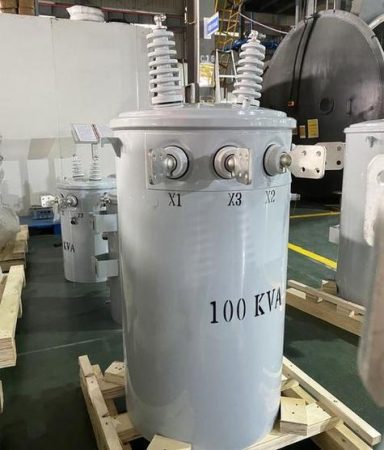
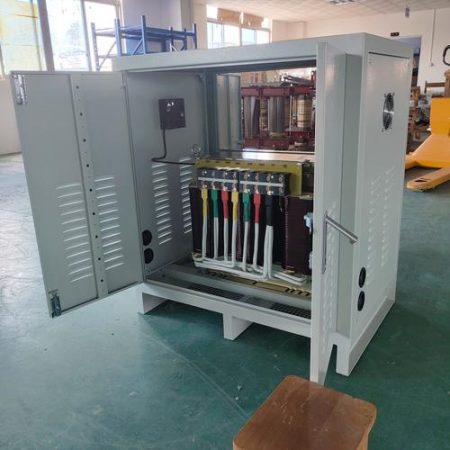
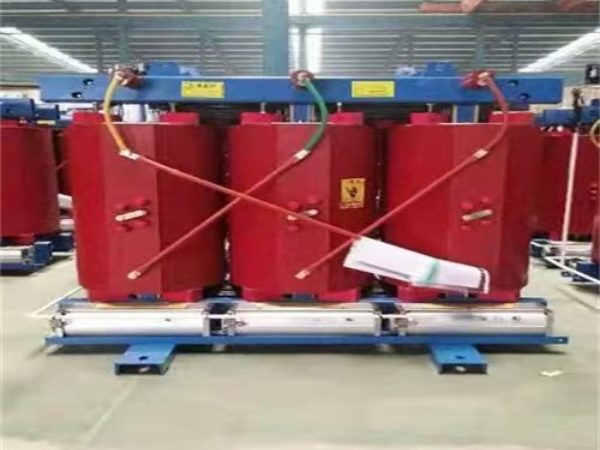
A marine transformer is a dry-type unit built to survive salt mist, engine-room heat, continuous vessel motion and a classification society survey — and that is why a 100 kVA shipboard unit typically costs about US$11,000–17,000 where a comparable land unit costs a fraction of it. This page breaks the price into its real drivers, gives you indicative market bands from 50 kVA to 1,500 kVA, and shows you the exact RFQ data sheet that turns a ballpark number into a firm quotation.
All prices on this page are indicative ex-works bands, not quotations. Every number is marked for confirmation. Converted from CNY at ¥7.10/US$ — [Confirm: FX rate and date at time of quote].
Built and documented to IEC 60076-11 (dry-type), IEC 60092-301 (shipboard electrical equipment), IEC 60529 (IP) and IEC 60068-2-52 (salt mist); class approval available through CCS, DNV, ABS, LR, BV, RINA and ClassNK — [Confirm: which societies hold your current type-approval certificates].
1. What a marine transformer has to survive that a land unit never sees
Buyers get sticker shock on marine transformers because they compare them to land units of the same kVA. The comparison is not valid. A shipboard transformer is specified against a completely different set of loads:
- Salt-laden, permanently humid air. Chloride deposition on winding surfaces and terminations is the single most common cause of early failure in shipboard dry-types. It drives insulation system choice, enclosure rating, and termination treatment.
- Continuous motion. The vessel never stops moving. Roll, pitch and heave impose cyclic mechanical load on the core-and-coil assembly, the bracing and the terminations for the entire service life — not just during a seismic event.
- Permanent inclination. Classification rules require equipment to operate correctly while the ship is heeled over, statically and dynamically. [Confirm: applicable inclination angles and durations per the society and vessel type — typically expressed as static list plus dynamic roll and pitch angles, with short-duration emergency angles.]
- Engine-room ambient temperature. Machinery-space ambient is commonly specified at 45 °C or 50 °C, not the 40 °C of IEC 60076-1. That ambient eats directly into your thermal margin and can force a derate or a step up in insulation class.
- No neutral on the main bus. Shipboard distribution is normally an IT (unearthed) system at 440 V or 690 V; the neutral only exists on the secondary side of the transformer feeding 230 V circuits. Getting the vector group and earthing arrangement wrong is a surveyor stop-item, not a paperwork nit.
- A surveyor. Nothing ships without documentation: material certificates, routine and type-test reports, and a survey visit with hold points. That documentation package is a real line item in the price.
That last point is the one buyers miss most often. On a land project you buy a transformer. On a marine project you buy a transformer plus a certificate file plus a survey, and the second and third items scale with the classification society’s scope, not with kVA.
2. Marine transformer price ranges by rating
Indicative ex-works bands for three-phase, 50 Hz, dry-type shipboard units. All figures require confirmation for your exact specification.
| Rating | Typical configuration | Indicative price (CNY) | Indicative price (US$ @ ¥7.10) | Notes |
| 50 kVA | Open-wound (VPI), 440/230 V, IP23 enclosure, salt-mist resistant finish | ¥50,000–80,000 | US$7,000–11,300 | Lightest and cheapest class of marine unit; [Confirm] |
| 100 kVA | Cast resin (CXB / SCB type), 440/230 V, IP56, copper windings, class certificate | ¥80,000–120,000 | US$11,300–16,900 | The most frequently quoted marine size; [Confirm] |
| 200 kVA | Cast resin, Class H, integrated temperature monitoring | ¥250,000–350,000 | US$35,200–49,300 | See the jump note below; [Confirm] |
| 500 kVA | Cast resin, forced-air cooling, shock and vibration design | ¥400,000–600,000 | US$56,300–84,500 | [Confirm] |
| 800 kVA | Cast resin, 690 V primary, IP56, Class H | ¥450,000–650,000 | US$63,400–91,500 | Cargo-ship main distribution size; [Confirm] |
| 1,000 kVA | Cast resin, 690 V or 440 V primary | ¥500,000–800,000 | US$70,400–112,700 | [Confirm] |
| 1,500 kVA | Offshore specification, hazardous-area terminal arrangement, −30 °C cold start | ¥900,000–1,300,000 | US$126,800–183,100 | Offshore support and DP vessels; [Confirm] |
Read the 200 kVA row carefully. Doubling capacity from 100 kVA to 200 kVA should roughly add 60–80% to the price, not triple it. When a 200 kVA line item lands at three times the 100 kVA figure, the extra is almost never capacity — it is brand, integrated monitoring,Class H insulation, or a type-approval portfolio being priced in. Ask the supplier to quote the same 200 kVA in the same construction as the 100 kVA row and compare like with like. If they cannot, you are comparing two different products.
Marine transformers sit in the special-transformer and dry-type families rather than in standard catalogue distribution — which is exactly why the spread between two quotes for “the same” unit can be wide.
3. The six things that actually move the price
| Driver | Typical effect on price | Why it moves | Confirm |
| Capacity: 100 kVA → 1,000 kVA | Roughly 5–8× from the 100 kVA base | Core steel, copper and enclosure all scale non-linearly | [Confirm per rating] |
| Primary voltage: 440 V → 690 V | +10% to +20% | Higher BIL, thicker insulation, larger creepage and clearance distances | [Confirm] |
| Copper vs aluminium windings | Copper +30% to +50% | Material cost, plus smaller volume for the same losses and lower lifetime joint risk | [Confirm] |
| Enclosure rating: IP23 → IP56 | +15% to +25% | Sealed enclosure, gasketed cable entries, and a derate that must be recovered by design margin | [Confirm] |
| Class approval scope (CCS / DNV / ABS / LR / BV / RINA / ClassNK) | +5% to +15% | Type-approval file, per-unit survey, material certificates (EN 10204 3.1 or 3.2) | [Confirm: which societies and certificate types] |
| Brand tier | Global marine platforms +30% to +50% | Type-approval portfolio, worldwide service network, spares availability | [Confirm] |
Two honest notes on this table.
The percentages are directionally useful and numerically soft. They are industry rules of thumb, not published price lists. Treat them as a way to rank your own requirements by cost impact — then get the actual numbers in writing for the configuration you are buying.
Brand premium is real, but it is not uniform. You are paying for three things: a type-approval file that already covers your vessel class and flag, a service engineer who can reach the ship’s next port, and spares that are stocked rather than manufactured. On a coastal or inland vessel that never leaves one trading area, a Chinese-built unit surveyed by the same classification society often delivers the same compliance at materially lower cost. On a vessel that trades worldwide and cannot wait three weeks for a part, the premium usually pays for itself in avoided off-hire. Decide which vessel you have before you decide which tier you buy.
4. Application bands: what each vessel type actually specifies
| Vessel type | Typical rating | What the spec always includes | Indicative band (US$) |
| Cargo ship main distribution | 800 kVA | 690 V primary, IP56, Class H, class certificate | US$63,400–91,500 |
| Cruise ship lighting and galley | 100 kVA | 440/230 V, low sound level, salt-mist resistant, accommodation-space fire behaviour | US$14,100–21,100 |
| Offshore support / DP vessel | 1,500 kVA | 690 V, hazardous-area terminal arrangement, −30 °C cold start | US$126,800–183,100 |
| Harbour tug and workboat | 50–100 kVA | Compact footprint, vibration-resistant build | US$7,000–16,900 |
All bands [Confirm] against your vessel’s actual specification.
Two things in this table deserve a flag.
The cruise-ship sound figure. Source material commonly quotes ≤55 dB(A) at 1 m. That is a sound pressure statement; what a type-test report declares is a sound power level LWA under IEC 60076-10. In a free field, 1 m sound pressure is roughly LWA − 11 dB — but an accommodation-space transformer sits in a small steel room with hard reflective surfaces, which pushes measured pressure back up. If noise matters, specify the LWA limit and the measurement standard, and treat the room’s acoustics as part of the problem. Cast resin units are inherently quiet at AN rating; forced-air fans are the usual culprit when a unit that tested quiet is loud in service.
Naval and defence programmes. Requirements such as very high shock levels (the 50 g grade that appears in some Chinese source tables) and electromagnetic shielding are defence-grade specifications that sit outside commercial classification rules. They are engineered and quoted as dedicated programmes with their own qualification testing. They are out of scope for a commercial marine price page like this one — if that is your requirement, say so in the first sentence of your enquiry so you are routed correctly.
5. Cast resin vs open-wound (VPI): the choice that decides service life
Most shipboard dry-type transformers come in one of two constructions. The cheap option is not automatically the wrong one, but in a salt atmosphere the difference is not cosmetic.
| Factor | Cast resin (epoxy encapsulated) | Open-wound / VPI |
| Moisture and salt resistance | Windings fully encapsulated; the best available defence against chloride ingress | Relies on impregnation quality; pinholes and cut edges remain vulnerable |
| Fire behaviour | Can be specified to IEC 60076-11 fire behaviour class F1 | Depends heavily on the resin system and the impregnation process; [Confirm per design] |
| Mechanical strength under vibration | Solid block construction, very robust | Coils are more compliant; bracing design carries more of the load |
| Repairability | A failed winding is not field-repairable — replace the unit | Sometimes repairable in a workshop |
| Relative price | Higher | Lower |
| Best fit | Machinery spaces, weather decks, accommodation-adjacent switchboard rooms, any high-humidity route | Clean, dry, temperature-controlled electrical rooms with low salt exposure |
If the transformer lives anywhere near a ventilation intake, a watertight door, or a weather deck, buy cast resin. The premium is small next to an unplanned replacement in a foreign port. Our enclosed cast resin units for exposed sites page covers what changes when the enclosure has to do the environmental work.
6. Voltages, vector group and earthing: get this wrong and the surveyor will stop you
The single most damaging sentence in a marine RFQ is “440 V in, 230 V out, 100 kVA.” It is technically complete and specification-wise useless. Here is what actually has to be nailed down.
Voltages. 440 V / 230 V at 60 Hz and 400 V / 230 V at 50 Hz are the common shipboard low-voltage pairs; 690 V is standard for larger and offshore installations, and is where thrusters, large pumps and DP loads usually live. North American vessels and shore supplies commonly use 450 V at 60 Hz. State primary, secondary, and whether the primary is 440 V or 690 V — the price difference is 10–20%, so this is not a detail to leave open.
Frequency. 50 Hz and 60 Hz are not interchangeable. Since flux is proportional to V/f, a machine wound for 50 Hz and run at 60 Hz still works thermally, but its guaranteed losses and impedance no longer hold, and the core is larger than a purpose-built 60 Hz design needs. Conversely a 60 Hz machine at 50 Hz can over-flux and overheat. Frequency must be stated at RFQ stage. This is the number one cause of a marine order going wrong, and it cannot be fixed after manufacture.
Vector group. Shipboard primaries are normally delta, so the vector group is written Dyn11 in IEC notation — which becomes Dyn1 on an ANSI/IEEE drawing. If your drawings are in ANSI and your transformer data sheet is in IEC, check this line explicitly; the two conventions number the clock position differently.
Earthing. The main 440 V or 690 V bus on a ship is typically an IT system: unearthed, or earthed through a high impedance, with a permanent insulation-monitoring device. The 230 V system is normally TN, with the neutral earthed at the transformer. That means the neutral exists only on the transformer secondary, and the earth-fault detection scheme is designed around it. Ask the switchboard supplier and the transformer supplier to confirm the same earthing philosophy in writing — this is where integration problems concentrate.
If you need a refresher on what each nameplate line actually binds you to, read how to read a transformer nameplate and technical parameters before you send the enquiry.
7. IP56, cooling and derating: the enclosure trap
IP56 looks like the obvious marine choice, and often is — but it is not free, and the cost is not only money.
What IP56 buys you. Per IEC 60529, the 5 is dust-protected and the 6 is protection against powerful water jets. That is the right rating for a weather deck, a machinery space that gets washed down, or anywhere salt spray reaches the unit. IP23 — the 3 is protection against spraying water at up to 60° from vertical — is a protected indoor rating and belongs in a dry electrical room, not on a deck.
What IP56 costs you in capacity. A sealed enclosure restricts heat dissipation. Cast resin transformers are air-cooled by nature; seal them and you either accept a derate or you add forced-air cooling, which reintroduces a fan — a moving part, a maintenance item, and a noise source. If your redundancy scheme counts forced-air capacity as firm capacity, it does not survive a fan failure. Size the AN rating to carry the load you cannot lose, and treat the AF uplift as an emergency margin.
The derate conversation you need to have. Three derates stack: enclosure (IP56), ambient (45–50 °C machinery space), and altitude if the vessel operates on high-altitude inland waterways. Ask for the derating curve in writing, applied to your actual combination, not a generic brochure figure. Our cooling classes explainer covers how AN and AF ratings are declared and what the uplift really means.
8. Hazardous areas: what Ex d and Ex p really mean on a transformer
Chinese source tables routinely list “Ex d IIB explosion-proof design, +10–30%” as a transformer option. In practice that line needs unpacking before you pay for it.
Ex d means flameproof enclosure — the enclosure contains an internal explosion and prevents ignition of the external atmosphere. It is a well-established protection concept for small equipment and for terminal boxes, which is where you will normally see it on a transformer. Applying Ex d to a large transformer enclosure is heavy, expensive and rarely what is actually done.
What is usually done instead. On offshore units with hazardous-area interfaces, the practical arrangements are: locate the transformer in a safe or pressurized area; use increased safety (Ex e) with a flameproof (Ex d) terminal box; or use pressurized enclosure (Ex p) where the transformer must sit inside a classified zone. Which one applies depends on the zone classification (Zone 1 vs Zone 2), the gas group (IIA, IIB or IIC) and the temperature class — and those three inputs come from the vessel’s hazardous-area classification drawing, not from the transformer supplier.
Compliance is a system, not a sticker. In the EU, ATEX (Directive 2014/34/EU) applies; internationally, the IECEx scheme. Either way you need a certified assembly with a certificate that covers the transformer and its terminal and monitoring arrangements. A “flameproof” claim on a transformer quotation without a certificate number is worth nothing. [Confirm: zone, gas group, temperature class and certification scheme for your installation.]
9. Standards and class approval you should see on the quote
This table is the fastest way to compare two marine quotations. If a supplier cannot populate the right-hand column, that is your answer.
| Item | Standard or body | What to ask for |
| Dry-type transformer | IEC 60076-11 | Type-test report; fire behaviour class F1, environmental class E2, climatic class C2 if claimed |
| Shipboard electrical equipment | IEC 60092-301 | Declaration of compliance with applicable clauses |
| Shipboard practice (US) | IEEE 45 | Where the vessel or owner is US-flag or US-spec |
| Ingress protection | IEC 60529 | IP rating stated with the enclosure configuration it was tested in |
| Salt mist | IEC 60068-2-52 | Test severity and duration; [Confirm severity] |
| Vibration and shock | IEC 60068-2-6 / society rules | Test record; [Confirm applicable category] |
| Sound | IEC 60076-10 / 60076-10-1 | Declared LWA, not a 1 m pressure figure |
| Energy efficiency | IEC 60076 series; EU Ecodesign 2019/1783 where applicable | P₀ and Pₖ values at the rated tap; note that shipboard units are typically outside DOE coverage — [Confirm per flag state and route] |
| Material traceability | EN 10204 3.1 or 3.2 | Certificates for core steel and winding conductor |
| Class approval | CCS, DNV, ABS, LR, BV, RINA, ClassNK | Type-approval certificate plus per-unit survey — see below |
| Quality system | ISO 9001 / 14001 / 45001 | Current certificate copies |
Type approval is not the same as unit certification, and confusing them is expensive. A type-approval certificate says a design has been reviewed and tested. It does not cover the specific unit being loaded onto your ship. The unit needs its own survey, and the survey has hold points in the manufacturing programme. Ask explicitly: does your price include the per-unit survey, the surveyor’s visit fees, and the certificate issue? Which society? And how many hold points are in the programme, because each one is a schedule risk.
For the standards question more broadly — whether your project should be specified to IEC or to ANSI/IEEE — see IEC 60076 vs ANSI/IEEE standards for export transformers. Flag state, owner’s engineering standard and the vessel’s existing switchboard usually decide this for you, and mixing the two across a single switchboard is a reliable way to create a commissioning problem.
10. Total cost of ownership: the loss calculation most marine buyers skip
Marine buyers negotiate hard on purchase price and almost never on losses — which is backwards, because a ship’s generator runs continuously and the transformer’s no-load loss is billed every hour of the vessel’s life, at marine fuel prices rather than grid tariffs.
Worked example, 1,000 kVA cast resin unit — all loss values [Confirm] from the type-test report:
At those ratios, a 20% reduction in no-load loss is worth about $1,200 a year and roughly $24,000 over 20 years — which is real money and usually more than the gap between two quoted brands at the same rating. Ask every bidder to state P₀ and Pₖ at the rated tap on the quotation itself, then rank bids on purchase price plus 20 years of losses. [Confirm: your actual marginal generation cost per kWh, which on diesel-electric and HFO plant can be well above $0.20.]
11. How to write an RFQ that gets a firm price
Every vague line in your enquiry becomes a contingency in the quotation. Here is the format that removes them.
Then add the cost items that are never in the unit price.
| Cost item | Typical range | Confirm |
| Sea freight for a large unit | US$1,400–7,000 depending on distance and port pair | [Confirm] |
| Installation and commissioning by the factory | 5–10% of equipment price | [Confirm] |
| Spares allowance (insulation parts, temperature controller modules, fans) | Budget 5% | [Confirm] |
| Per-unit classification survey and certificate | Quoted per society and programme | [Confirm] |
| Off-hire cost of a late delivery | Usually dwarfs everything above | [Confirm with owner] |
That last row is the one that should change how you buy. On a vessel in service, the cost of a transformer that arrives three weeks late is measured in off-hire days, not in dollars of equipment. If two bids are close, take the one with the shorter and more certain delivery programme — and get the class-approval hold points into the schedule up front. We document how we handle survey and documentation on export programmes in the overseas utility EPC compact substation programme.
12. FAQ
How much does a marine transformer cost? Indicative ex-works bands run from about US7,000–11,300 for a 50 kVA open-wound unit to US126,800–183,100 for a 1,500 kVA offshore specification. The most commonly quoted size, 100 kVA cast resin with IP56 and a class certificate, sits around US$11,300–16,900. Every figure on this page needs confirmation for your specification — [Confirm] — and excludes freight, survey and commissioning.
Why is a marine transformer so much more expensive than the same kVA on land? Four cost items that a land unit does not carry: environmental construction (salt mist, humidity, IP56 or equivalent), mechanical design for continuous vessel motion and permanent inclination, higher ambient-temperature rating with its associated derate, and the class-approval package including type tests, material certificates and per-unit survey. The approval package alone is typically 5–15% of price and scales with the society’s scope rather than with kVA.
Do I need 440 V or 690 V? Follow the loads. 690 V is the standard for larger and offshore installations — thrusters, large pumps, DP distribution — while 440 V (450 V at 60 Hz in North American practice) is the general shipboard low-voltage level. A 690 V primary costs roughly 10–20% more because of higher insulation and clearance requirements. Choose based on the largest motor and the switchboard rating, not on what the previous vessel used.
Can I use a 50 Hz transformer on a 60 Hz vessel, or the other way round? No, not without a formal review. Flux is proportional to voltage over frequency. A 50 Hz machine run at 60 Hz is usually thermally acceptable but its guaranteed losses and impedance values no longer apply, and it is heavier than a purpose-built 60 Hz design. A 60 Hz machine run at 50 Hz can over-flux and overheat. Frequency must be fixed at RFQ stage; it cannot be corrected after manufacture. This also matters for shore connection: a vessel at one frequency plugging into shore power at another needs either a dual-frequency arrangement or a frequency converter, not just a transformer.
Is IP56 always the right choice for a marine transformer? For weather decks, wash-down machinery spaces and anywhere salt spray reaches the unit, yes. Inside a dry, temperature-controlled electrical room, IP56 is paying for protection you do not need and costing you thermal margin you do. The sealed enclosure restricts cooling, so you either accept a derate or add fans. Match the rating to the actual location.
What is the difference between class type approval and a per-unit certificate? Type approval covers a design: the society has reviewed drawings and witnessed type tests. A per-unit certificate covers the specific unit being shipped, issued after a survey with manufacturing hold points. You normally need both, and they are separate line items. Ask whether the quotation includes the per-unit survey, the surveyor’s fees and the certificate issue — and ask how many hold points are in the programme, because each one is a schedule risk.
Should I specify copper or aluminium windings on a ship? Copper costs roughly 30–50% more [Confirm] and buys better loss performance, a more compact unit and lower long-term termination risk. On a vessel, where access for re-termination is poor and vibration is continuous, that termination reliability argument is usually worth more than the efficiency argument. If the unit is weight-critical or the budget genuinely cannot stretch, aluminium is legitimate — but specify the termination treatment and torque regime explicitly.
Can I get an Ex d explosion-proof transformer for a hazardous zone? Ex d (flameproof) is normally applied to the terminal box, not to a large transformer enclosure. For transformers the practical arrangements are: place the unit in a safe area, use Ex e with an Ex d terminal box, or use Ex p pressurization. Which applies depends on the zone (1 or 2), gas group (IIA/IIB/IIC) and temperature class on the vessel’s hazardous-area drawing. In the EU the certification route is ATEX (2014/34/EU) and internationally IECEx. Never accept a bare “explosion-proof” claim without a certificate number.
What do I need to send to get a firm price? The 20-line RFQ sheet in section 11. At minimum: kVA, primary and secondary voltage, frequency, vector group, ambient temperature, enclosure IP rating, construction type, winding material, cooling, and the classification society with type approval or per-unit survey specified. If you want losses compared rather than just listed, state your required P₀ and Pₖ or require both to be quoted at the rated tap.
How long does delivery take, including class approval? [Confirm: current lead time for your rating and specification.] Plan the class-approval programme as part of the schedule from day one — the survey hold points, not the manufacturing time, are what usually slip. Order the documentation package in the same conversation as the transformer, because a missing EN 10204 3.1 certificate can hold a unit at the quay.
Can you build to a non-Chinese classification society? Yes — CCS, DNV, ABS, LR, BV, RINA and ClassNK are routinely handled, but the scope and cost differ by society and by whether you need type approval, per-unit survey, or both. [Confirm: current type-approval portfolio per society.] Certificates not held are listed as available on request rather than claimed.