In an industrial park, the 10 kV feed is the backbone that keeps production lines, machine tools, HVAC and process equipment running. Sitting right in the middle of that feed is the transformer — the one piece of equipment that quietly decides how stable your voltage is, how much you pay in energy losses, and how often maintenance pulls people away from production.
Over the past few years, 10 kV amorphous alloy transformers have become a default choice for park distribution and step-up duty, largely because they cut no-load losses dramatically while holding up under rough industrial conditions. This guide covers why they fit industrial parks, how to size and specify one, where they are being used today, and the questions buyers ask most often.
1. Why Amorphous Alloy Fits Industrial Park Power Systems
Industrial parks run heavy loads for long hours — often around the clock — which puts three demands on a transformer: save energy, stay stable, and last. An amorphous alloy core delivers on all three.
Dramatically lower no-load losses
This is the headline feature. Amorphous metal has far higher magnetic permeability than grain-oriented silicon steel, and the ribbon is a fraction of the thickness, so hysteresis and eddy-current losses in the core collapse. In practice, no-load loss drops by 70% or more versus a comparable silicon-steel unit. Because a distribution transformer stays energized even when the lines are idle, that saving runs 8,760 hours a year. For a park with dozens of transformers, it is one of the fastest paybacks available in plant electrical work.
Stability under fluctuating loads
Park loads are anything but flat: motors start, welders fire, presses cycle. Amorphous units are built with rigid winding support and clamping structures that handle repeated inrush and short-circuit stress, which keeps voltage dips from turning into unplanned downtime.
Quiet operation and good thermal behavior
Controlled flux density and damped core clamping hold sound levels down — important if the switchgear room sits next to an office or a lab. Heat dissipation is engineered for continuous duty, so the unit stays within insulation class limits even in a poorly ventilated room.
Built for tough environments
Industrial sites mean humidity, dust, and in some cases chemical vapor. Amorphous units are available with moisture-resistant insulation systems and corrosion-protected enclosures, so they work in an indoor switchgear room or an outdoor pad without eating the maintenance budget.
Meets top-tier efficiency rules
These transformers meet China’s Grade 1 efficiency tier under GB 20052 ([Confirm] confirm the exact edition and the equivalent DOE / NEMA TP-1 or EU Ecodesign class for your target market). If your company has carbon-reduction or ESG targets to hit, specifying an amorphous core is one of the easier boxes to tick. For a deeper dive on specifications and test evidence, our transformer knowledge base covers the details.
2. How to Choose the Right 10 kV Amorphous Alloy Transformer
Picking a unit comes down to five checks. Work through them in order and you avoid both overspending on capacity you do not need and overloading a unit that is too small.
Step 1 — Size to your real load
Start with connected load, peak demand, and diversity factor. Common park sizes are 250 kVA, 500 kVA, 800 kVA and 1,250 kVA. As a rule of thumb, target steady-state loading of 60–80% and leave 20–25% headroom for future lines. A 1,250 kVA class unit, for example, is a workhorse size for a mid-sized plant or a large commercial block; a representative configuration is shown on our 1,250 kVA amorphous alloy transformer page. Too much capacity wastes money on the purchase and on no-load losses; too little cooks the insulation. The full range sits in our transformer product catalog.
Step 2 — Match the type to the installation
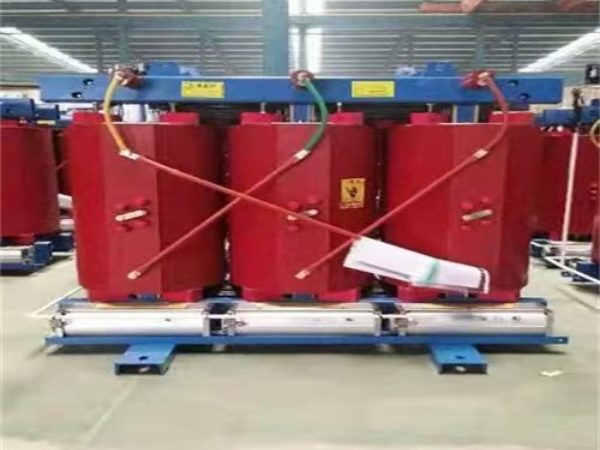
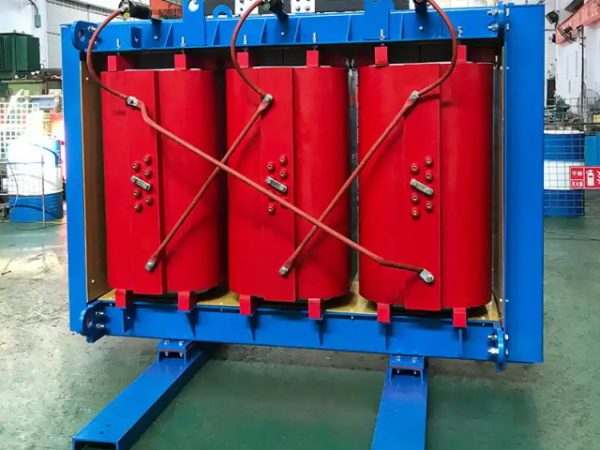
Indoor switchgear rooms: go with a cast-resin dry-type amorphous unit such as the SCBH15 series amorphous alloy dry-type transformer. No oil means no fire load, no containment pit, and essentially no fluid maintenance — which is why it is the standard answer for buildings and indoor substations.
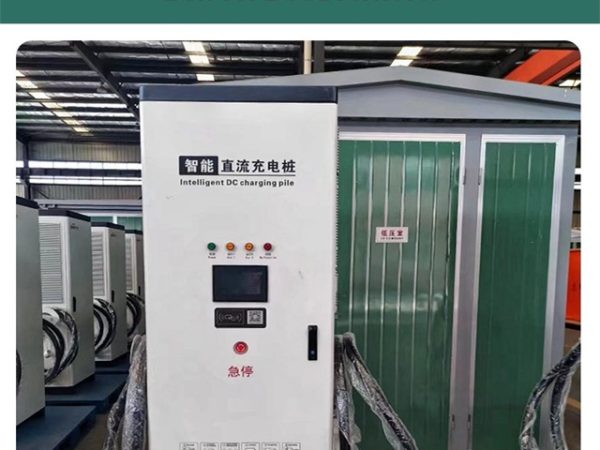
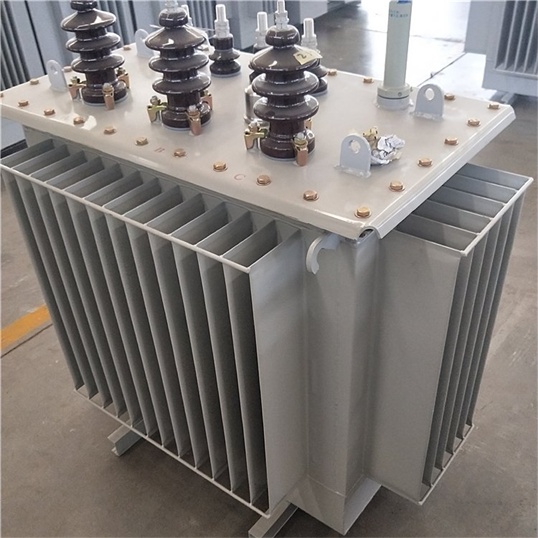
Outdoor or pad-mounted duty: an oil-immersed design fits better. The SH15-M style sealed amorphous unit handles weather and temperature swings well; if amorphous is not mandatory for that location, the S20 series oil-immersed distribution transformer is the conventional alternative. Where you want the substation delivered as one skid — transformer, switchgear and protection in a single enclosure — look at a YBW series prefabricated compact substation instead of building the yard from scratch.
Step 3 — Specify copper windings
Ask for all-copper windings, not aluminum or copper-clad. Copper conducts better, runs cooler under the same load, resists thermal cycling, and simply lasts longer. On a transformer expected to run for 20-plus years, the difference in purchase price is small next to the difference in lifecycle cost.
Step 4 — Verify the manufacturer, not just the brochure
Require production qualifications, type-test reports, and routine test reports (ratio, winding resistance, insulation resistance, applied and induced voltage) before signing. A legitimate maker hands these over without hesitation. Low bids usually hide thin copper, recycled core material, or no testing at all.
Step 5 — Add monitoring if you have a smart-plant roadmap
Models with built-in winding temperature sensors and remote monitoring let you trend load and temperature and catch problems before they trip a breaker. If you are building toward predictive maintenance, this is cheap to add now and expensive to retrofit later.
3. Where These Transformers Are Used
Across our project case studies, 10 kV amorphous alloy units show up in a fairly consistent set of roles:
- Manufacturing plants — feeding machine tools, production lines and automation cells, where a voltage dip means scrap and restart time.
- New-energy facilities — serving as the step-up transformer for solar PV and battery storage so generated power can be exported efficiently. Design details are covered in our guide to step-up transformers for solar, wind and storage, and one in the field is described in our 50 MW solar PV plant project.
- Warehousing and logistics parks — powering lighting, ventilation, dock equipment and sorting systems reliably across long operating hours.
- Chemical and mining sites — where corrosion resistance and short-circuit strength matter more than first cost.
- Older park retrofits — swapping out high-loss legacy transformers. Because footprint and connection dimensions are largely standardized, an amorphous unit can usually be dropped in without rebuilding the substation, which is exactly why retrofits pencil out so well.
4. FAQ
How much money does an amorphous alloy transformer actually save?
No-load loss is roughly 70% lower than a comparable silicon-steel unit. Take a 1,000 kVA transformer: if the amorphous version saves [Confirm] 1.2 kW of no-load loss continuously, that is about 10,500 kWh a year per unit — before counting the reduced cooling load in the room. Multiply by the number of transformers in the park and the payback on the price premium typically lands within a few years, after which it is pure savings for the remaining life of the asset.
What makes amorphous metal different from silicon steel?
Silicon steel is a crystalline alloy rolled into thin sheets. Amorphous metal is cooled so fast from the melt that no crystal structure forms — the result is a glass-like ribbon roughly [Confirm] 0.025 mm thick with very high permeability and low coercivity. Magnetizing it takes far less energy, which is exactly where no-load loss comes from. The trade-off is that the ribbon is harder to work with and more brittle, which is why core assembly quality matters when choosing a supplier.
Dry-type or oil-immersed — which should I buy?
It is mostly about location and fire code. Indoor rooms, basements, and anywhere people work nearby favor cast-resin dry-type: no flammable fluid, no containment, minimal maintenance. Outdoor yards and heavy industrial duty favor oil-immersed: better overload capability, better cooling, lower cost at the same rating, and a sealed tank that shrugs off weather. Our dry-type transformer selection guide walks through the decision in more detail.
Are amorphous transformers noisier or more fragile?
Older designs had a reputation for more hum, because the core is physically larger for a given rating. Current designs control flux density and use damping in the core-clamping structure, so sound levels land in the same range as a standard dry-type unit ([Confirm] confirm the guaranteed sound power level, LWA, in dB(A) for the exact rating). On fragility: the ribbon itself is brittle, but once assembled, clamped and encapsulated, the core is well protected. Short-circuit strength is determined by winding design and bracing rather than core material, so ask the supplier for short-circuit withstand test evidence.
Is 10 kV used in the United States?
In the US, primary distribution commonly runs at 12.47 kV or 13.8 kV rather than 10 kV, though 10 kV-class equipment is widely used inside industrial facilities fed from a plant substation. Practically, this means you specify the primary voltage your utility or switchgear actually delivers, and confirm the standard you are building to — IEC 60076 for most global projects, ANSI/IEEE C57.12 for North America. Both are available on the amorphous platform.
What capacity should I choose for a new park?
Add up connected load, apply a diversity factor — typically 0.6–0.8 for mixed industrial load — divide by power factor to get kVA, then add 20–25% headroom. If the result lands near a standard size, round up rather than down. Also think about how many units you want: two smaller transformers in parallel often beat one large one, because you can run one at higher efficiency during light shifts and keep redundancy during maintenance.