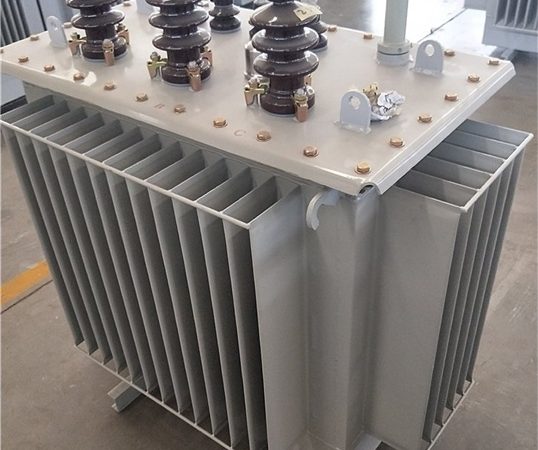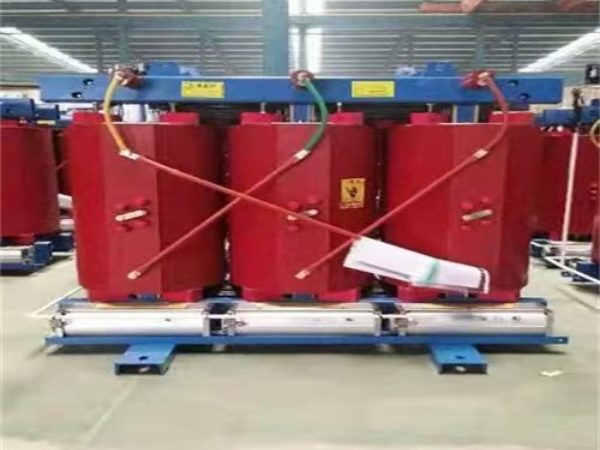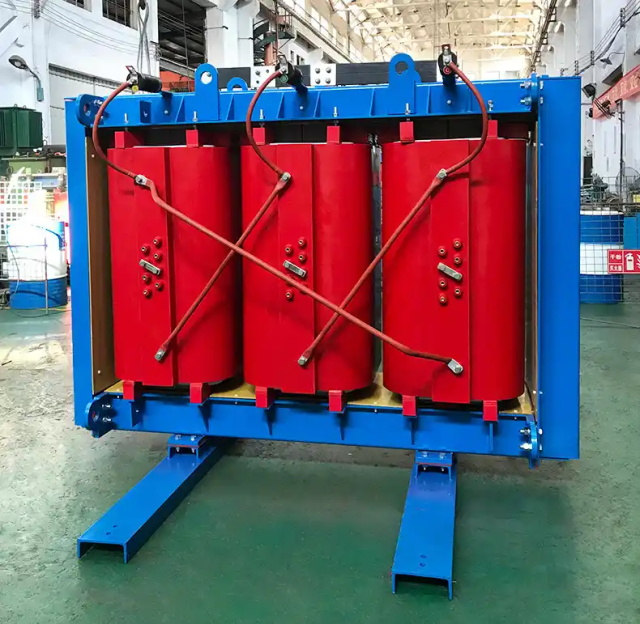
When you’re specifying power equipment for a shopping mall, an office tower, or a mixed-use commercial complex, three things decide whether the electrical room becomes a constant headache or a complete non-issue: safety, energy cost, and noise. Conventional dry-type transformers waste more power than they should, demand hands-on upkeep, and carry fire risks nobody wants in a building full of people. The SCBH15-1250 kVA amorphous alloy transformer is a 10 kV-class epoxy cast-resin distribution unit built to solve exactly those problems. Ultra-low losses, flame-retardant construction, maintenance-free operation, and rock-steady performance make it a go-to choice for both new commercial construction and retrofit projects — high-rise offices, shopping centers, corporate towers, and urban mixed-use developments alike. You can browse the full lineup on our transformer products page.
1. Sized Right for Mid- to Large-Scale Commercial Loads
The SCBH15 series is a Grade-1 energy-efficiency amorphous alloy dry-type transformer under China’s national efficiency standard, and 1250 kVA is the sweet spot for mid- to large-size commercial buildings.
Commercial loads behave very differently from industrial loads. Demand swings hard through the day, equipment runs around the clock, tenants pack a lot of hardware into every floor, and the tolerance for downtime or voltage sag is close to zero. This unit is rated 10/0.4 kV, which lines up with standard urban commercial distribution practice. Instead of conventional silicon steel, the core uses high-grade amorphous alloy: higher magnetic permeability, dramatically lower eddy current loss. Compared with a standard dry-type transformer, no-load loss drops by more than 70% and no-load current falls sharply — which matters enormously here, because a commercial transformer sits energized 24 hours a day whether the building is busy or empty. See the SCBH15 amorphous alloy dry-type transformer for full ratings, or the SCB13 cast resin dry-type transformer if you want a silicon-steel comparison point.
2. Fire Safety Built for Occupied Buildings
Safety is the single biggest reason this transformer fits commercial real estate so well. The windings are fully encapsulated in epoxy resin, giving the unit flame-retardant, self-extinguishing, moisture-proof, and dust-proof properties. There is no oil — so there is no oil to leak, and no oil to ignite.
That removes the entire risk profile that makes oil-filled transformers a poor fit inside sealed buildings and indoor switchrooms. Commercial properties are densely occupied, finished to a high standard, and held to strict fire codes. This unit won’t burn, won’t explode, resists heat and cracking, and can be installed directly in a building’s electrical room or a basement plant room — no special fire separation required. It satisfies high-rise fire protection requirements and takes electrical fire off the table as a realistic failure mode, which is what building owners, insurers, and code officials actually care about.
3. Quiet, Clean, and Essentially Maintenance-Free
Day-to-day operating experience is where owners notice the difference. The SCBH15-1250 kVA runs at very low sound levels with no vibration and no high-frequency whine. Tenants on the floor above the electrical room, shoppers below it, and staff working nearby never hear it — a genuine requirement in Class A commercial space, not a nice-to-have.
The sealed insulation system resists humidity, corrosion, and dust, so it handles the messy reality of in-building environments — temperature swings, damp basements, construction dust — without complaint. In practice that means long-term maintenance-free operation: no periodic oil changes, no core inspections, no scheduled dielectric testing. For a property management team, that translates directly into lower labor and materials spend on electrical O&M, and a distribution system that simply stays up. We used the same low-noise cast-resin approach on a city hospital project where acoustics were non-negotiable.
4. Stability Under Peak Load and Cleaner Power
Commercial buildings never really power down, so the transformer has to absorb punishment. The amorphous alloy core holds its magnetic properties over time, runs at low temperature rise, and delivers strong short-circuit withstand. When the building hits its peak — HVAC, lighting, elevators, and building automation systems all coming online together — the transformer takes the inrush without voltage dips, nuisance trips, or overload faults.
It also does a solid job suppressing harmonics, which cleans up the power feeding sensitive loads: building automation, security and access control, central HVAC controls, and tenant office equipment. Cleaner power means fewer unexplained resets and longer service life for expensive downstream gear. For a deeper look at harmonic-heavy loads, our K-factor dry-type transformer project for a hyperscale data center covers the same engineering territory.
5. A Straightforward Win on Sustainability Targets
With decarbonization policy and tighter building energy codes pushing owners toward retrofits, transformer replacement has become one of the easiest efficiency upgrades available. The SCBH15-1250 kVA fully complies with the GB 20052 energy-efficiency standard, and its lifetime energy savings are substantial relative to the capital outlay. Swapping in this unit lowers a building’s overall consumption and supports green building certification targets — LEED or BREEAM internationally, China’s green building rating domestically.
It works in both directions: new distribution capacity for a commercial complex under construction, or a like-for-like replacement of aging silicon-steel units in an older office tower or mall. On total cost of ownership, it beats a conventional silicon-steel transformer comfortably.
6. Bottom Line
Fire safety, ultra-low losses, quiet operation, zero maintenance, and stable performance — that combination is exactly what commercial building distribution demands. The SCBH15-1250 kVA amorphous alloy transformer is core equipment for modern high-end commercial property, not an optional upgrade. Our SCBH15-1250 kVA units are built to spec and tested to published parameters, with custom configurations available, inventory on hand, and delivery nationwide — so we can support procurement and installation for commercial distribution projects of any scale.
Frequently Asked Questions
How much can a 1250 kVA amorphous alloy transformer actually save on our electric bill? Virtually all of the savings come from no-load loss, which is cut by more than 70% versus a comparable silicon-steel unit. Because a commercial transformer is energized continuously, that reduction accrues 8,760 hours a year regardless of how busy the building is. On a typical office tower the upgrade often pays for itself within a few years, then keeps paying. Run your actual load profile against the published loss figures before you commit.
Can it go indoors — a basement, an occupied floor, right next to tenant space? Yes, that’s precisely what it’s designed for. The epoxy cast-resin construction contains no flammable liquid, is self-extinguishing, and meets high-rise fire code requirements, so it can sit in an indoor electrical room or basement plant room without the fire separation, oil containment, or ventilation that oil-filled equipment would require.
How quiet is it, really? Quiet enough that tenants don’t notice it. The amorphous core and cast-resin encapsulation keep both audible hum and structure-borne vibration low, which is why this construction is routinely specified for hospitals, hotels, offices, and retail spaces above or adjacent to the electrical room.
What does “maintenance-free” mean in practice? No oil sampling, no oil changes, no scheduled core or winding inspections. Routine work is limited to periodic visual inspection, cleaning the enclosure and ventilation paths, and infrared scans of terminations — the same light-touch program you’d run on any dry-type unit. Expect a few hours a year, not a maintenance contract.
Will it hold up during our summer peak, when HVAC and elevators all start at once? Yes. The unit is designed with low temperature rise and strong short-circuit withstand, with overload margin for exactly those concentrated motor and compressor inrush events. It absorbs the morning startup surge and hot-afternoon demand without voltage sag or protective tripping.
Does it protect sensitive building systems from harmonics? It does. The design offers good harmonic suppression, which stabilizes the power feeding building automation, security systems, central HVAC controls, elevators, and tenant IT equipment. That reduces nuisance faults and extends the service life of downstream electronics.
How do I confirm 1250 kVA is the right size for my building? Work from a measured demand profile — connected load, diversity factor, peak demand, and planned tenant build-out — rather than from floor area alone. If you’re early in design, our guide on distribution transformer types and sizing walks through the calculation, and how to choose a dry-type transformer covers the full specification checklist.
What standards does it meet, and can it be supplied for a North American project?
The unit is built and tested to the GB and IEC framework, including GB 20052 for energy efficiency. North American projects typically call for ANSI/IEEE compliance and 60 Hz configurations instead — our comparison of IEC 60076 vs ANSI/IEEE standards explains the differences, and we can advise on the right spec for your jurisdiction.
Is it suitable for replacing an older transformer in an existing building? Very much so. Retrofit is one of the most common applications, since the efficiency gain shows up immediately in operating cost. Physical footprint and terminations need to be checked against the existing room, but the electrical interface is generally straightforward.
What should I look for when qualifying a supplier? Verifiable type-test reports, real factory audit access, genuine in-house manufacturing, and stated loss values you can hold them to in the contract. Our technical resource library goes deeper on supplier qualification, and the project case studies show how these units perform in the field.